Three reasons Robert Burns poems feel impossible and exactly how to fix each one — once you know how to handle them, reading Burns becomes genuinely enjoyable.
Why Robert Burns Poems Are Hard to Understand
Three specific barriers make Robert Burns poems hard to understand: Scots vocabulary, 18th-century references, and dense imagery. Each one has a simple fix. Here's how to read Burns with confidence.
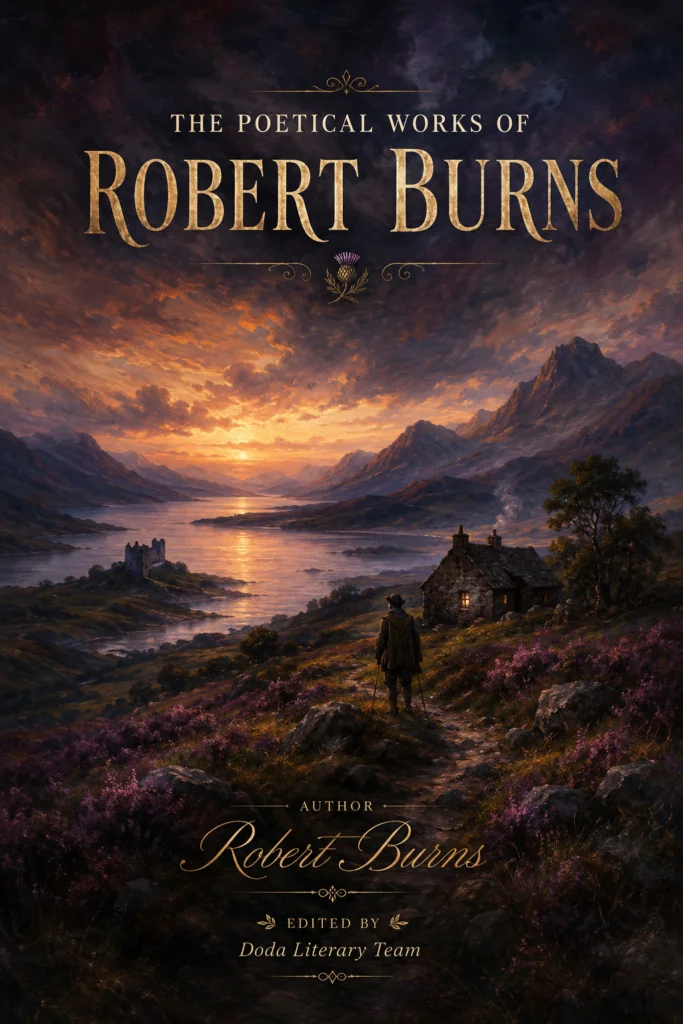
| Main Barrier | Scots vocabulary (100–150 key words) |
| Second Barrier | 18th-century references |
| Third Barrier | Dense imagery in longer poems |
| Time to Adapt | 3–5 poems |
| Recognition Rate | 80% after 10 poems |
| Best Solution | Annotated edition |
🧗 What Actually Makes Burns Difficult
Before we fix the problem, it is worth being honest about scale: Burns is not hard in the way James Joyce or T.S. Eliot is hard. You are not wrestling with a dense private mythology or decades of literary references. With Burns, there are really just a handful of concrete, nameable barriers, and once you understand each one you can see the poem beneath. The three barriers below are the ones that trip up almost every new reader, and they are the ones the annotated edition was built to remove.
Here is the encouraging part: the difficulty is front-loaded. The first Burns poem you read will be the hardest, because you are learning a new set of words and habits all at once. By your third or fourth poem, the Scots vocabulary starts to feel automatic, the rhythm stops looking like a typo, and you begin to hear the music instead of the obstacles.
🧱 Barrier 1: The Scots Vocabulary
This is the biggest problem. Burns wrote in a blend of Scots and English. Common Scots words appear constantly.
| Scots Word | Meaning |
|---|---|
| ken | know |
| braw | fine, good |
| wee | small |
| gang | go |
| auld | old |
| bonnie | beautiful |
| dinna | do not |
| canna | cannot |
| monie | many |
| nae | no / not |
Fix: Keep a short glossary nearby. After reading 3–4 poems, you will recognise most of these words automatically. The vocabulary is actually smaller than it first appears — Burns used roughly the same 100–150 Scots words repeatedly.
🏛️ Barrier 2: 18th-Century References
Burns referenced local people, places, and events his original audience knew well. Modern readers miss these. For example, when he writes about “the Mauchline bastards” or “Holy Willie,” he is referring to real people and scandals in his hometown.
Fix: An annotated edition explains every reference in context. You do not need to research 18th-century Scottish towns — the notes do it for you.
📚 Remove every barrier with an annotated edition
👉 Get the Annotated Edition🎭 Barrier 3: Dense Imagery in Longer Poems
Short poems like “A Red, Red Rose” are straightforward. Longer poems like “Tam o’ Shanter” pack multiple images and events into every stanza. It is easy to lose the thread.
Fix: Read a summary of the poem first to understand the narrative arc. Then read the full poem with line-by-line explanations. This two-pass approach prevents confusion.
⏱️ How Long Until Burns Becomes Readable?
Most readers need about 3–5 poems before the Scots vocabulary starts to feel natural. After 10 poems, you will recognise 80% of the dialect words without checking. The initial effort pays off quickly.
🧱 Barrier 4: The Older Syntax and Word Order
The vocabulary is only half the battle — the other half is that Burns’s sentences do not always behave like modern English ones. Scots grammar in the 18th century put words in slightly different positions than we are used to, which is why a line can look familiar and still leave you lost. “Gang aft agley” is not just obscure vocabulary; the word order itself takes a beat to translate into “often go wrong.”
A few patterns come up again and again. Burns often places the verb somewhere unexpected, drops words modern English would require, or uses a form like “thegither” (together) or “wi” (with) that shifts the sound and the sense at once. On top of that, the meanings of some words have drifted in the two centuries since — a word that once meant one thing now means something slightly different. None of these are hard once you know they exist, but unfamiliarity with older syntax is a real, separate barrier from vocabulary, and it is easy to mistake one for the other and give up. The best fix is simply to see the same patterns repeated across a handful of poems until your brain starts expecting them.
🎓 A Practical Two-Pass Strategy That Works
Whatever the poem, the same method carries most readers through. First, read a short summary of what happens — the plot, the speaker, and the situation. Burns’s poems nearly always have a situation behind them, and knowing it in advance removes most of the guesswork. Then read the poem slowly, line by line, with the Scots words translated as you go. Do that, and you are no longer decoding a foreign language; you are following a story you already half-understand, which is a completely different and far more pleasurable experience.
Do not worry about catching every nuance on the first pass. Burns rewards rereading, and almost no one gets full sense of “Tam o’ Shanter” or “Holy Willie’s Prayer” the first time. If you can get the gist and enjoy the sound, you have succeeded. The guide to understanding Burns poetry like a reader expands this method into a fuller step-by-step routine.
🏛️ Why He Wrote This Way
Understanding why Burns wrote in Scots makes the difficulty feel meaningful rather than frustrating. In the 18th century, English was the language of politics, commerce, and “polite” literature across Britain, and Scottish writers were often expected to smooth the Scots out of their prose to be taken seriously. Burns went the other way: he wrote in the vivid, idiomatic Scots of the people he grew up among, partly because it was his authentic voice and partly because it was a deliberate assertion that Scottish life and Scottish identity deserved a place in poetry. That choice is exactly why he became Scotland’s national poet — and it is why his work can be hard for modern readers on both sides of the Atlantic who simply never learned the dialect. The difficulty is not a flaw in the poetry; it is the price of Burns’s loyalty to his own language. You can see the full stakes in our comparison of the annotated versus original Burns editions, which shows how much of the experience changes once the dialect is explained.
💡 Why It Is Worth the Effort
The payoff is real. Once the language stops being the obstacle, Burns turns out to be one of the most direct, warm, funny, and emotionally generous poets in the language. The same man who wrote the savage religious satire “Holy Willie’s Prayer” also wrote songs that have been sung at weddings and funerals for two hundred years. The difficulty you are fighting right now sits in front of a body of work that rewards persistence more than almost anything else you will read — and most people find that after the first few poems, the effort becomes pure pleasure. To see where you are headed, our plain-English versions of the famous poems show how much sense hides beneath the dialect.
🎯 What the Annotated Edition Unlocks
Line-by-Line Translations
Every Scots word translated on the page you're reading — no flipping to a glossary or dictionary.
500+ Word Scots Glossary
All Scots words indexed alphabetically with definitions and the poem they appear in.
Teacher's Insights
Stanza-level commentary explaining what Burns is doing — the literary devices, tone, and meaning.
Historical Context Notes
Every 18th-century reference explained — people, places, scandals, and traditions.
Poem Summaries
Read the summary first (the "two-pass approach") to understand the narrative before diving in.
Beautiful EPUB Format
Works on Kindle, Apple Books, Kobo, Google Play Books, and Foliate.
❓ Frequently Asked Questions
Is Burns harder to read than Shakespeare?
Different kind of hard. Shakespeare uses Early Modern English with some archaic vocabulary. Burns uses Scots, which is effectively a different language with its own grammar. Many readers find Burns harder initially, but the vocabulary is more limited — about 100–150 key words versus Shakespeare’s much larger range.
Do I need to learn Scots to read Burns?
Not fully. You need to learn about 100–150 Scots words that appear repeatedly. An annotated edition handles this for you by translating every unfamiliar word on the page.
Why did Burns write in Scots if it makes him harder to read?
It was a political choice. In the 18th century, English culture dominated Britain, and Scottish culture was looked down on. By writing in Scots, Burns asserted Scottish identity and preserved the language. His choice is why he remains Scotland’s national poet.
What is the hardest Burns poem to read?
“Holy Willie’s Prayer” is one of the hardest because it requires knowledge of 18th-century Scottish church politics. “Tam o’ Shanter” is also challenging due to its length and dense Scots vocabulary. Both benefit enormously from line-by-line annotation.
What is the easiest Burns poem to start with?
“A Red, Red Rose.” It uses mostly modern English, has only 16 lines, and its theme (love) is universal. You can understand it on first reading with minimal help.
Is there a version of Burns that fixes all three barriers?
Yes — the Poems and Songs of Robert Burns: Annotated Edition addresses all three barriers: it translates Scots vocabulary, explains historical references, and provides summaries that help you navigate longer poems.