An annotated edition of a book is an edition that includes explanatory notes, vocabulary definitions, historical context, and critical commentary alongside the author’s original text. Rather than reading difficult classic prose in isolation, an annotated version provides immediate clarification for obscure phrases, cultural references, and literary symbolism.
📖
What Is an Annotated Edition? Complete Meaning & Reading Guide
An annotated edition is a book that includes explanatory notes, definitions, historical context, and critical analysis printed alongside the original text. If you have ever read a classic novel or poem and struggled with archaic vocabulary or forgotten historical references, an annotated edition bridges the gap.
📖 What Makes Something “Annotated”?
Annotations come in many forms. The most common types include:
Glossary / word definitions. Short definitions of unfamiliar words. Common in books written in older forms of English — Chaucer, Shakespeare, Burns — or books with specialised vocabulary.
Footnotes / endnotes. Explanations of specific references, historical events, or cultural context that the original author assumed readers would know.
Line-by-line commentary. Paragraph-by-paragraph or stanza-by-stanza explanations of what the text means and why it’s significant.
Chapter summaries. A recap of events before or after each chapter. Useful for keeping track of complex plots.
Thematic analysis. Discussion of the big ideas the book is exploring — love, class, power, identity — and how they develop across the work.
Character notes. Profiles, relationship maps, and character arcs. Particularly useful in novels with large casts.
Historical context. What was happening in the world when the book was written, and how that influenced its content.
👥 Who Benefits from Annotated Editions?
Students benefit most obviously. If you’re studying a text for an exam or writing an essay about it, an annotated edition saves hours of research time. Instead of hunting down what a historical reference means or why a particular line is significant, the explanation is right there.
Teachers can use annotated editions as a shortcut for lesson planning. The analysis and discussion questions often translate directly into classroom material.
Casual readers benefit in a different way. If you enjoy classic literature but struggle with archaic language or references from a different century, annotations remove the friction. You can focus on enjoying the story instead of constantly looking things up.
Who Doesn’t Need Annotations
If you’re already familiar with the text or comfortable with the language it’s written in, annotations might feel intrusive. Some readers find constantly breaking to read notes distracting. And if you prefer to form your own interpretation without being guided by someone else’s analysis, you might want to skip annotated editions entirely.
📊 Types of Annotations: A Quick Comparison
| Type | What It Does | Best For |
|---|---|---|
| Word definitions / glossary | Defines individual words | Poetry, dialect-heavy texts (Burns, Shakespeare) |
| Footnotes | Explains references | Historical novels, allusions |
| Chapter summary | Recaps events | Complex plots, study/revision |
| Thematic analysis | Explains broader meaning | Essays, deep understanding |
| Character map | Shows relationships | Novels with large casts |
| Simplification | Rewrites in plain language | Beginners, language learners |
❌ What Annotated Editions Are NOT
This is worth clarifying because there is confusion about it:
An annotated edition is not a simplified edition. A simplified edition rewrites the text in easier language. An annotated edition keeps the original text and adds explanation around it.
An annotated edition is not a study guide. Study guides (like SparkNotes or Cliff’s Notes) summarise and analyse the text separately from it. An annotated edition embeds the analysis into the text itself.
An annotated edition is not a critical edition. Critical editions (like those from Oxford or Norton) include scholarly apparatus, variant readings, and academic essays. They’re aimed at researchers. Annotated editions are aimed at readers.
📚 Ready to try an annotated edition?
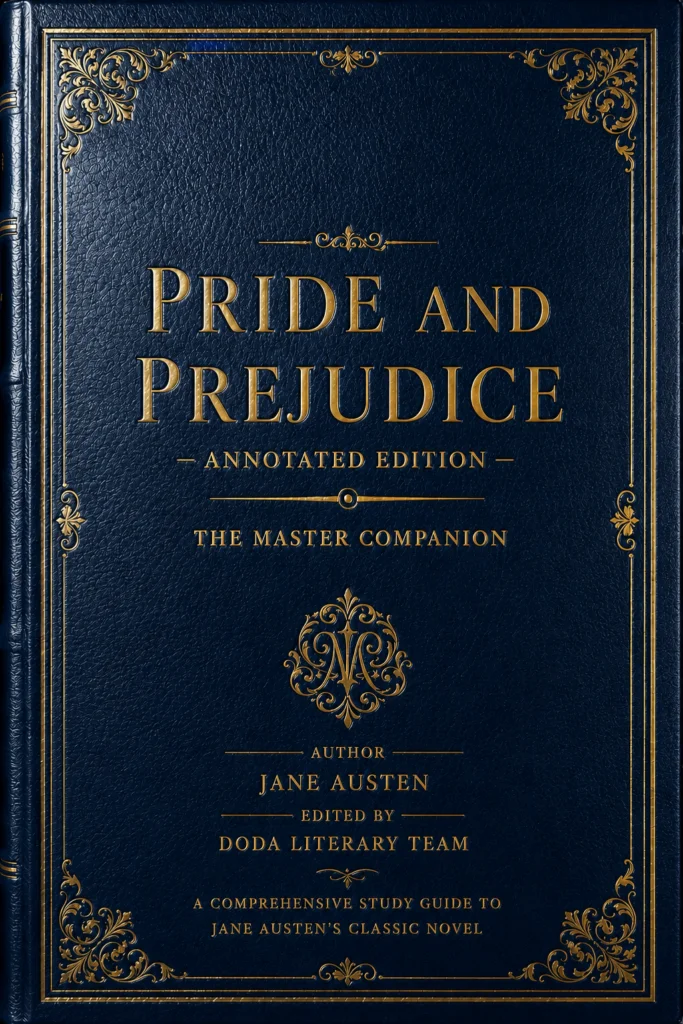
👉 Get the Pride and Prejudice Annotated Edition✅ How to Choose an Annotated Edition
If you’re considering an annotated edition, ask yourself:
Is the language of the original a barrier? If yes, look for an edition with extensive word definitions. Editions with glossaries for every archaic term or dialect word are ideal for poetry and older texts.
Do you need historical context? Some editions focus on cultural and historical background (what a specific dress style meant, who a referenced politician was). Others focus on literary analysis. Pick the one that matches your need.
How much help do you actually want? Some annotated editions are dense with commentary on every page. Others are lighter, adding only occasional notes. Look at a sample before buying.
🔍 Examples from Real Editions
Here’s how the same passage from To a Mouse by Robert Burns appears in three different formats:
Plain text (no annotations):
Wee, sleekit, cow’rin, tim’rous beastie, O, what a panic’s in thy breastie!
Annotated (word definitions):
sleekit — smooth, sleek. cow’rin — cowering, trembling. tim’rous — timid, fearful.
Annotated (with analysis):
The poem opens with a burst of sympathetic address. Burns’s accumulation of adjectives — sleek, cowering, timid — immediately establishes the mouse as a fellow creature deserving of compassion.
The difference is clear: the plain text assumes you know the Scots words. The annotation ensures you don’t get lost.
💭 Are Annotated Editions Worth It?
Yes — if you’re in the right situation. For a student studying a text for the first time, an annotated edition can be the difference between understanding and confusion. For a teacher, it’s a time-saver. For a casual reader who wants to go deeper, it’s a guide that doesn’t require a separate book in the other hand.
The key is choosing the right edition for your level. If you need line-by-line help, look for an edition with dense annotations. If you just want occasional context, a lighter touch is better.
📘 What Reading an Annotated Edition Feels Like
The best way to understand annotations is to imagine them in place. When you reach a line you don’t understand, a small footnote number or marginal marker sits beside it. Tap or glance across, and a note explains the word, the reference, or the significance — then you return to the text. You never have to leave the page to look something up, and you never have to break your flow to reach for a dictionary.
This rhythm is what separates annotation from study guides. A study guide treats the book from the outside; an annotated edition lives inside it. Some editions keep the help minimal and unobtrusive, while others add generous commentary on every page. Which you prefer depends on how much help you want and how much you dislike interruption. The great advantage of e-reader annotations is that they are optional — you can read cleanly and dip into the notes only when curiosity strikes, exactly the way many readers approach deciding whether to read with an annotated edition at all.
🎓 Choosing Annotations for Your Goal
Different readers need different kinds of help, and the best annotated editions are built with a specific reader in mind. If you are studying for an exam, look for editions with strong chapter summaries, thematic analysis, and discussion questions. If you are a teacher planning lessons, editions with clear explanations you can lift into handouts save hours of preparation. If you are a casual reader who finds the language a struggle, the most valuable feature is a thorough glossary of archaic and dialect words.
Match the edition to the task. A poet’s annotated collection may foreground word definitions and line-by-line commentary, while an annotated novel might emphasise character maps and historical context. The same book can be edited several different ways, so read a sample before you buy. When you find an edition that matches your goal, the annotations feel less like extra reading and more like a helpful companion walking beside you through the text.
❓ Frequently Asked Questions
What is the difference between an annotated edition and a study guide?
An annotated edition adds explanations directly into the text — footnotes, glosses, marginal notes — so you read the original content and the help side by side. A study guide (like SparkNotes) is a separate book that summarises and analyses the text independently. You flip between the two.
Are annotated editions only for classic literature?
No, although they’re most common for older texts. You can find annotated editions of modern novels, non-fiction, poetry collections, and even screenplays. The principle is the same: the editor adds context or explanation that the reader might need.
Do annotations make the book harder to read?
They can, if you find the interruption distracting. Some readers prefer to read the text uninterrupted first and then review the notes separately. Others appreciate having the explanation available instantly. Try a sample before committing to a full annotated edition.
Can I read an annotated edition on my e-reader?
Yes. Most annotated editions are available in EPUB format, which works on Kindle, Kobo, Apple Books, and other major e-readers. Some also include hyperlinked footnotes that let you tap to view the note and tap to return to the text.
Do I need to read the annotations as I go?
Not at all. Annotations are designed to be optional — available when you need them, ignorable when you don’t. Many readers complete a chapter first and then review the notes. Find the approach that works for your reading style.
How much more does an annotated edition cost?
Annotated editions typically cost slightly more than plain editions because they include original scholarly content. Expect to pay $7–$15 for a quality annotated EPUB, compared to $0–$5 for a plain text edition. The price reflects hundreds of hours of editorial work.
Are annotated editions suitable for book clubs?
Absolutely. The discussion questions and thematic analysis included in most annotated editions provide excellent material for book club conversations. They help groups go beyond surface-level discussion into deeper literary analysis.
Do annotated editions include the complete original text?
Yes. An annotated edition keeps every word of the original and adds explanation around it — it never rewrites or cuts the content. This is what distinguishes it from a simplified or abridged edition, which changes the text itself to make it easier.
Where can I find good annotated editions?
Quality annotated editions come from major academic publishers and from independent digital publishers alike. Independent e-book editions often combine a clean typeset with extensive notes at a more accessible price. Look for editions that list their features — glossaries, chapter summaries, discussion questions — so you know exactly what you are getting.
📚 Related Articles
Lewis Carroll’s Victorian wordplay is a quintessential example requiring context; read our Alice’s Adventures in Wonderland Annotated Guide.
🎯 Start Your Annotated Reading Journey
The Pride and Prejudice Annotated Edition gives you everything you need to enjoy Austen’s masterpiece:
- ✅ Complete, unabridged text — every word of the original 1813 edition
- ✅ 242 literary annotations — historical context, critical analysis, cultural references
- ✅ 139 modern simplifications — complex passages rewritten in plain English
- ✅ Chapter summaries — 150–250 word recaps of every chapter
- ✅ 76 discussion questions — with original answers for students and teachers
- ✅ Character profiles — relationship maps for every major character