Teaching Robert Burns to secondary school students comes with a specific challenge: the Scots vocabulary makes the poems feel inaccessible, but the themes are exactly what teenagers connect with.
Teaching Robert Burns: A Complete Classroom Guide for English Teachers
A practical approach to teaching Robert Burns in secondary school — how to handle the Scots language, structure a 2-week unit, differentiate for all learners, and assess student understanding.
👉 Get the Annotated Edition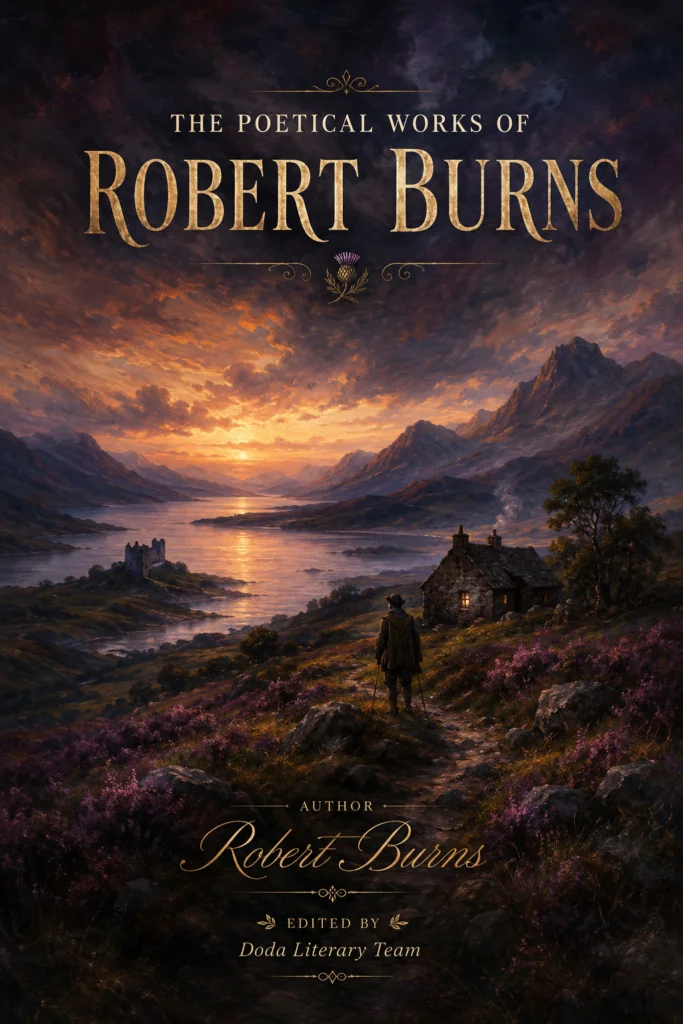
| Poet | Robert Burns (1759–1796) |
| Suggested Unit | 2 weeks (8 lessons) |
| Grade Level | 9–12 |
| Key Challenge | Scots vocabulary barrier |
| Best Resource | Annotated edition with glossary |
📚 Why Teach Burns?
Burns is not just a Scottish poet. He is a writer who speaks about universal human experiences — love and loss (Ae Fond Kiss), social inequality (A Man’s a Man for A’ That), the fragility of life (To a Mouse), and national pride (Scots Wha Hae). His poems are short, rhythmic, and memorable. Students who groan at Wordsworth often enjoy Burns because the poems have narrative drive and emotional directness.
The barrier is the language. Once you solve that, the poems work.
🗣️ The Language Problem and How to Fix It
Burns wrote in a blend of Scots and 18th-century English. Students see “Wee, sleeket, cowran, tim’rous beastie” and shut down. The solution is not to avoid the Scots but to give students the tools to decode it.
Strategy 1: Pre-teach the 20 most common Scots words. Words like wee (small), bonie (beautiful), braw (handsome), auld (old), lang (long), fu’ (full/drunk), unco (very), wha (who), wi’ (with), and nae (no/not) appear constantly. Give students a one-page glossary before the first poem.
Strategy 2: Read aloud first. Burns wrote for the ear. Read a poem aloud while students follow along. The rhythm and rhyme make the meaning clearer than silent reading ever does.
Strategy 3: Use the line-by-line approach. Pick one stanza, project it, and go through it line by line — what does each Scots word mean, what is Burns saying, why is he saying it this way?
📅 Structuring a Burns Unit
Week 1: Building Confidence
Day 1 — Who Was Robert Burns? Start with the man — the ploughman poet, the womaniser, the political radical, the national icon. Show the short YouTube video of Auld Lang Syne being sung at New Year.
Day 2 — To a Mouse: This is the best starting poem. It is short (8 stanzas), tells a clear story, and has a universal theme. Read it aloud. Go through the Scots glossary together.
Day 3 — A Red, Red Rose: Love poetry that works because it uses concrete similes rather than abstract declarations. Compare it to a modern love song.
Day 4 — Scots Glossary Challenge: Give students an unfamiliar Burns stanza without annotations. Have them use a Scots glossary to translate it.
Week 2: Going Deeper
Day 1 — Tam o’ Shanter (excerpts): Focus on the opening pub scene and the chase sequence. The supernatural elements engage students.
Day 2 — Ae Fond Kiss: A love poem about separation. Discuss the emotional register and compare to the earlier love poems.
Day 3 — A Man’s a Man for A’ That: Burns’s equality anthem. Discuss the political context (the French Revolution, 1795).
Day 4 — Assessment: Essay, creative writing, or performance options.
🎯 Differentiation Strategies
For struggling readers: Focus on shorter poems. Pre-teach Scots vocabulary in smaller batches. Use line-by-line translations as a crutch.
For advanced students: Assign Holy Willie’s Prayer (satire) or Tam o’ Shanter (full poem). Push them to analyse Burns’s use of the vernacular as a political statement.
For ELL students: Burns is actually more accessible than many English poets because the Scots is a separate barrier — once students learn the Scots words, they are on equal footing with native speakers.
📝 Assessment Ideas
- Poetry analysis essay: Use poem summaries as essay-planning templates
- Scots translation test: Give students 5 unfamiliar Burns lines to translate
- Comparative essay: “Compare how Burns handles love in A Red, Red Rose and Ae Fond Kiss”
- Creative response: Write a poem about a modern experience using Scots vocabulary
📚 Teach directly from the annotated edition — no separate teacher's guide needed
👉 Get the Annotated Edition🎓 What the Annotated Edition Unlocks for Teachers
Line-by-Line Explanations
Every difficult line in all 539 poems is paraphrased — prepare a lesson in minutes instead of hours.
500+ Scots Glossary
Use as a classroom reference tool. The cumulative glossary covers every Scots word across all poems.
Poem Summaries
Overview, Historical Context, Key Themes, and Literary Devices for every poem — perfect for handouts.
Teacher's Insights
Ready-made thematic analysis and literary commentary for every stanza — no separate teacher's edition needed.
Discussion Questions
Each poem's analysis includes questions and prompts designed for classroom discussion and essays.
Projectable Format
Works on all devices and can be projected in class. Compatible with Kindle, Apple Books, Kobo, and Foliate.
🧭 Connect Burns to Modern Topics
Burns’s poems plug into almost anything else you teach. A Man’s a Man for A’ That works alongside social justice units and protest writing — students can hunt its echoes in modern equality movements. A Red, Red Rose and Ae Fond Kiss sit comfortably beside contemporary love songs. To a Mouse is a gateway to empathy and shared fragility. And Tam o’ Shanter connects to folklore and the supernatural strand that runs through Scottish culture.
The magic for teachers is that the themes need almost no introduction — teenagers already understand inequality, heartbreak, anxiety about the future, and the thrill of a good ghost story. Your job is simply to show them that an 18th-century ploughman poet was talking about the same things. Start from the emotion, then layer on the Scots. For lesson-ready material on the main poems, our complete guide to Burns for beginners is a useful syllabus map.
📖 Pair Burns with Other Forms
Burns rewards juxtaposition more than almost any other poet. Put his verse next to a Wordsworth poem and students suddenly see why Burns is the more direct, more musical writer — and why he reaches readers the Romantics often miss. Pair his songs with their modern covers: the melodies live on, and hearing the tune removes the last barrier to the text.
Two pairings earn their keep in class. First, translation: show students the same stanza in Scots and in modern English side by side, and the discussion writes itself — our annotated vs original comparison is built for exactly this exercise. Second, the line-by-line approach: break one stanza into individual lines, decode each in turn, then reassemble — the method in our guide to Old English and Scots poetry applies to Burns stanza by stanza.
🗓️ Assessment That Checks Real Understanding
Closed-book recall of dates will mislead you — Burns has to be tested on the skills that actually matter. The strongest assessments ask students to do something with the text: translate a new stanza they have never seen (an honest test of the glossary), compare two poems’ treatment of one theme, or perform a poem with attention to rhythm.
A “reading portfolio” works beautifully across a two-week unit: each student keeps translations, glosses, and one-paragraph reflections for every poem studied, then submits the best three pieces — continuous evidence of progress without a single high-stakes moment. For exam-season revision, our exam-study guide turns the same skills into targeted practice with the annotated edition.
✅ Quick Wins for Reluctant Readers
Some adjustments pay off disproportionately. Read aloud always — never let a silent stumble be the first experience of the poem. Give the glossary before the poem, not after; students who know wee means “small” before line one are far less likely to shut down. And lower the stakes early: a simple “what did you picture?” question beats “what does this symbolise?” in the first week.
If a class is stuck on the language itself, back away from the oldest poems and lean on the songs — hearing Auld Lang Syne in context, or the melody of a love song, reminds students that Burns is a musician first. For a deep dive into the barrier itself and why it reads so foreign, why Burns poems are hard to understand explains the historical split between Scots and Standard English so you can present it as history instead of a personal failing.
❓ Frequently Asked Questions
Do I need a separate teacher's edition to teach Burns?
No. The annotated edition includes Teacher’s Insights for every poem — thematic analysis, literary devices, and historical context. You can teach directly from the student-facing text.
What's the best poem to start a Burns unit?
To a Mouse. It’s short, tells a clear story, has a universal theme, and contains the most famous line in Burns’s work.
How do I handle the Scots vocabulary in class?
Pre-teach 20 common words, read aloud first, and use the line-by-line approach. The annotated edition’s glossary makes this straightforward.
Can I use modern English translations in class?
Yes, but use them alongside the original, not instead of it. Students should see both versions to appreciate Burns’s language.
How long should a Burns unit be?
Two weeks (8 lessons) works well as a standalone poetry module or as part of a Romantic poetry scheme.
What assessments work best for a Burns unit?
Poetry analysis essays, Scots translation tests, comparative essays, and creative writing assignments all work well.
Which poems should I cover if I only have one week?
Trim to three anchor poems: To a Mouse (the accessible classic), A Red, Red Rose (pure craft), and one choice poem — A Man’s a Man for A’ That for social themes or Tam o’ Shanter for narrative. That leaves time for the Scots glossary and one assessment. Spending two lessons on each anchor beats cramming in six poems at a glance.
How much prep time does a Burns unit actually take?
With the annotated edition, the poem summaries and line-by-line explanations replace most of your preparation — the main prep is choosing your sequence and printing glossary handouts. Many teachers plan the two-week unit in a single afternoon by following the structure in this guide and pulling discussion questions from the edition’s per-poem note.
Do the poems work for younger students, not just grades 9-12?
Yes, with selection. Middle-school students respond well to To a Mouse, A Red, Red Rose, and the songs, especially once they hear the rhythm read aloud. Save the satires and the full Tam o’ Shanter for high school, where the historical and literary references land. The short, musical poems are the best bridge at any age.
📚 Related Articles
Teach Burns with confidence — no separate teacher’s guide required
Poems and Songs of Robert Burns — The Annotated Edition
539 poems with line-by-line explanations, Scots glossary, and Teacher’s Insights for every poem.
👉 Get the Annotated Edition{ .cta-button }