Studying Robert Burns for an exam requires memorising quotes, analysing language, understanding context, and writing essays under time pressure. An annotated edition gives you all the raw material — here is how to use it strategically.
How to Study Robert Burns for Exams with an Annotated Edition
A step-by-step strategy for using an annotated edition to ace your Robert Burns exam — build your poem list, use the glossary efficiently, analyse with Teacher's Insights, and practise essay writing.
👉 Get the Annotated Edition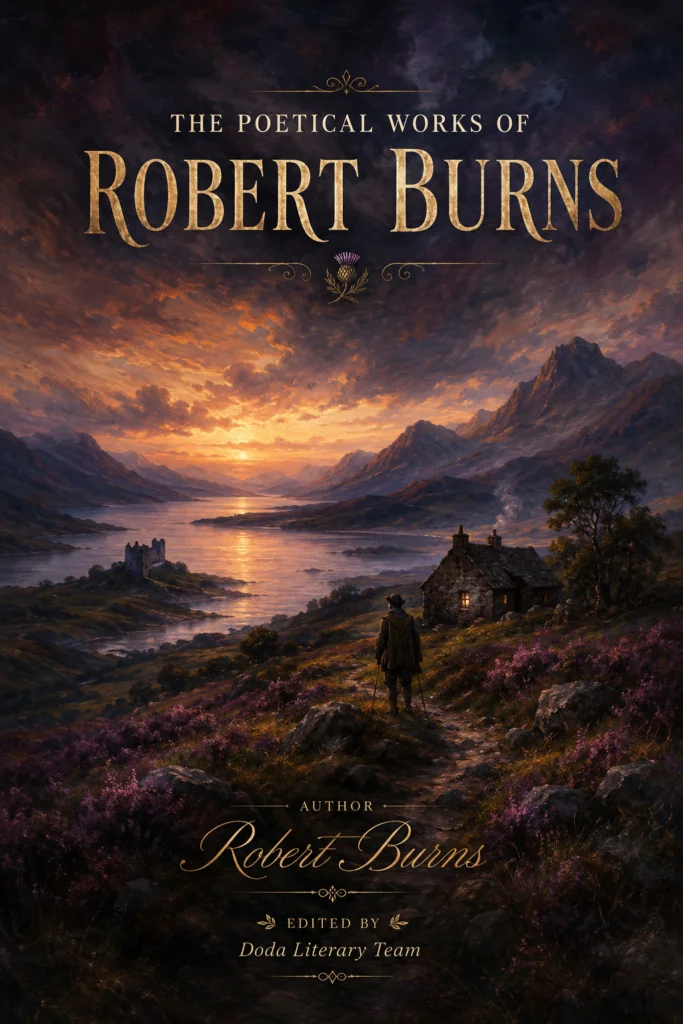
| Poet | Robert Burns (1759–1796) |
| Exam Strategy | 5-step system |
| Study Period | 4 weeks recommended |
| Key Resource | Annotated edition |
| Best For | High school and college exams |
🎯 Where to Start: the Shape of the Task
Before you open a single poem, look at the whole task. A Burns paper is not asking you to have read all 539 poems — it is asking you to read a handful closely and write about them with confidence. An annotated edition changes your odds by turning that daunting shelf of Scottish poetry into a prepared route through the six or eight poems you will actually write about.
📗 Why an Annotated Edition Is Better for Exam Prep
A plain collection of Burns poems gives you the text and nothing else. An annotated edition does three things that directly help exam performance:
- Line-by-line explanations — every difficult line is paraphrased in plain English, so you spend study time on analysis rather than decoding
- Scots-to-English glossary — 500+ Scots words defined, so you can quickly check what words mean
- Teacher’s Insights — thematic and literary commentary for each stanza, giving you ready-made analysis for essays
📋 Step 1: Build Your Poem List
Most Burns exam papers focus on a core set of poems. The most frequently examined include:
- Tam o’ Shanter (narrative poem, rich in imagery)
- To a Mouse (thematic — plans going wrong)
- A Red, Red Rose (love poetry, figurative language)
- Address to a Haggis (cultural identity)
- Holy Willie’s Prayer (satire, religious hypocrisy)
- Ae Fond Kiss (love and loss)
- A Man’s a Man for A’ That (equality, social justice)
The annotated edition covers all 539 poems, so any poem on your syllabus is included with full annotations.
🔍 Step 2: Read with the Glossary First
Before analysis, make sure you understand what every word means.
How to use the glossary:
- Read one stanza of the original text
- Check every unfamiliar word against the glossary
- Read the line-by-line explanation to confirm you understood
- Move to the next stanza
💡 Step 3: Use the Teacher’s Insights for Analysis
Once you understand what the poem says, analyse how and why Burns wrote it. The Teacher’s Insights provide commentary on:
- Thematic content — what idea is Burns exploring?
- Literary devices — metaphor, personification, irony, satire
- Historical context — real-world events or people referenced
- Structural choices — why this rhyme scheme or metre?
✍️ Step 4: Practise Essay Writing with Summary Cards
Each poem includes a structured summary with Overview, Historical Context, Key Themes, and Literary Devices. These function as essay outlines.
📝 Step 5: Memorise Quotes Efficiently
Use the annotations to identify the most quotable moments — lines where key themes are stated most clearly, lines with striking imagery, and lines that show character or voice.
📅 Sample Study Schedule (4 Weeks)
| Week | Focus | Using the Annotated Edition |
|---|---|---|
| Week 1 | Read 8 core poems with glossary | One poem per day, focus on vocabulary |
| Week 2 | Re-read with Teacher’s Insights | Take notes on themes and devices |
| Week 3 | Practise essay outlines | Use summary cards as templates |
| Week 4 | Timed essay writing | Write 2–3 full essays using quotes from annotations |
📚 Get everything you need for exam success in one ebook
👉 Get the Annotated Edition🎓 What the Annotated Edition Unlocks for Exam Prep
Line-by-Line Explanations
Every difficult line paraphrased — spend your study time on analysis, not decoding.
500+ Scots Glossary
Quickly check any Scots word without leaving the poem. Saves hours of dictionary time.
Poem Summaries
Overview, Context, Themes, Devices — use as essay outline templates for exam questions.
Teacher's Insights
Ready-made analysis you can quote or paraphrase in essays — shows examiners you understand the text.
Quote Identification
Key quotes highlighted with analysis — perfect for memorisation and timed essays.
Portable Format
Study on any device — Kindle, Apple Books, Kobo, or your phone. Take your notes anywhere.
📝 What Exams Actually Ask
Real Burns questions come in predictable shapes: theme (love, equality, friendship, the fear of poverty), character or voice (the narrator of Tam o’ Shanter, the speaker of To a Mouse), style (imagery, Scots, satire), and — in most systems — context.
Whatever its shape, a strong Burns essay follows one skeleton: an introduction that restates the question, body paragraphs built on point, quote, comment on the language, and a link back to the question — then a short “so what”.
The skill is knowing which lines to reach for. To a Mouse gives you the famous confession:
“The best-laid schemes o’ mice an’ men / Gang aft agley”
and the stanza that calls the mouse a “fellow-mortal”. To a Louse adds the prayer for self-knowledge — “O wad some Pow’r the giftie gie us / To see oursels as ithers see us!” — as a louse struts across a lady’s bonnet in church. A Red, Red Rose pairs simile with hyperbole: the rose “newly sprung in June”, then “Till a’ the seas gang dry”. Ae Fond Kiss turns on “Had we never loved sae kindly”; Tam o’ Shanter on the reckless “Weel done, Cutty-sark!”; and the public poems run on refrains: Auld Lang Syne (friendship), Scots Wha Hae (freedom), A Man’s a Man for A’ That (equality). Each is unpacked in our summaries of the major Burns poems.
📖 How the Annotated Edition Helps in the Exam Hall
Because the poems come with analysis built in, you are rehearsing material already decoded rather than constructing answers from nothing. The line-by-line explanations do the paraphrasing that once meant toiling through a Scots dictionary; the 500+ word glossary removes the vocabulary barrier; the Teacher’s Insights supply the “how” and “why” examiners award marks for; and the poem summaries turn it into a ready-made essay outline. Our comparison of annotated versus original Burns poems shows the difference.
🏛️ Historical & Cultural Context Wins Marks
Context is a quiet marks-multiplier. Burns was born in 1759, the son of a struggling tenant farmer, and lived between farm work and a post as an excise officer — a background behind his sympathy for the poor. He wrote amid the Enlightenment and the American and French Revolutions, whose language of liberty pulses through the public poems: Scots Wha Hae imagines the army Bruce led before Bannockburn in 1314, while Auld Lang Syne draws on the old Scots tradition of parting songs (“lang syne” means “long since”). The edition’s notes flag those real people and events so you can drop a confident line of context into any essay — and our guide to Robert Burns and his era fills in the rest.
💡 Why It Still Matters
Burns’s concerns are startlingly modern: the dignity of ordinary working people, the injustice of judging worth by rank, kindness to the vulnerable, the pain of parting, and the stubborn hope for a fairer world. A poem written in the 1780s about a frightened field mouse — or about a labourer insisting that rank is no measure of worth — gives you a contemporary essay subject. When a question asks for a personal response, argue that his egalitarian vision, “Man to Man, the warld o’er / Shall brithers be for a’ that”, is why school boards keep him on the syllabus. If the Scots worries you, our piece on why Burns’s poems feel hard to understand has the fixes.
⏱️ Revision Techniques That Actually Work
The final weeks reward smart habits, not just hours:
- Space your practice. Revisit each poem after a day, then three days, then a week — short sessions beat cramming.
- Test yourself instead of re-reading. Cover the Teacher’s Insight and recall each poem’s themes, one device, and one quote from memory.
- Keep a quote bank. One page per poem: two or three key lines and one line on why each matters.
- Build a personal glossary. Copy the 20–30 Scots words you trip over onto one sheet, and keep the Scots glossary sample beside it.
- Work with past papers. Sketch the three body points from a poem’s summary card for a real question, then write one timed essay each week.
- Explain the poem out loud. If you can teach To a Mouse to a friend in two minutes, you own it well enough for the exam hall.
❓ Frequently Asked Questions
How many poems do I need to prepare for a Burns exam?
Most exam boards expect you to write about 2–3 poems in depth. Prepare 6–8 poems thoroughly so you can choose the best ones for the question.
What if a poem I need isn't in the syllabus list?
The annotated edition covers all 539 poems. Whatever your exam board includes, it’s in there with full annotations.
How do I memorise quotes effectively?
Choose 2–3 quotes per poem that show key themes or striking imagery. Annotate why each quote matters — context makes memorisation easier.
Should I learn the Scots words for the exam?
You don’t need to memorise the glossary, but recognising common words (auld, ken, gang, bonnie) will save you time in the exam.
How do I structure a Burns essay?
Use the Poem Summary as your template: Overview (what happens), Context (why it was written), Themes (what it means), Devices (how it’s written). Support each point with quoted evidence.
Can I use the annotated edition during the exam?
Check with your teacher. Some exams allow annotated texts; others don’t. Either way, studying with the edition prepares you for open- or closed-book formats.
Which Burns poems come up most often in exams?
Check your exam board’s specification first, but the usual suspects are To a Mouse, A Red, Red Rose, Tam o’ Shanter, and Address to a Haggis, with A Man’s a Man for A’ That and Auld Lang Syne frequent in theme questions. Prepare 6–8 poems so you always have a choice.
How should I use past papers with the annotated edition?
Use past papers to plan, not just to read. Pick a real question, sketch the three body points from the poem’s summary card, then write one full timed essay each week — you will soon see the same themes and pairings recur.
📚 Related Articles
Ace your Burns exam with the complete study resource
Poems and Songs of Robert Burns — The Annotated Edition
539 poems with line-by-line explanations, Scots glossary, and Teacher’s Insights — everything you need for exam success.
👉 Get the Annotated Edition{ .cta-button }