Robert Burns poems about nature are never just about nature — he used animals, weather, and seasons as mirrors for human experience. Here is how he did it.
Robert Burns Poems About Nature Explained
Robert Burns poems about nature are never just about nature. He grew up on a farm and knew the Scottish landscape intimately, but used animals, weather, and seasons as mirrors for human experience.
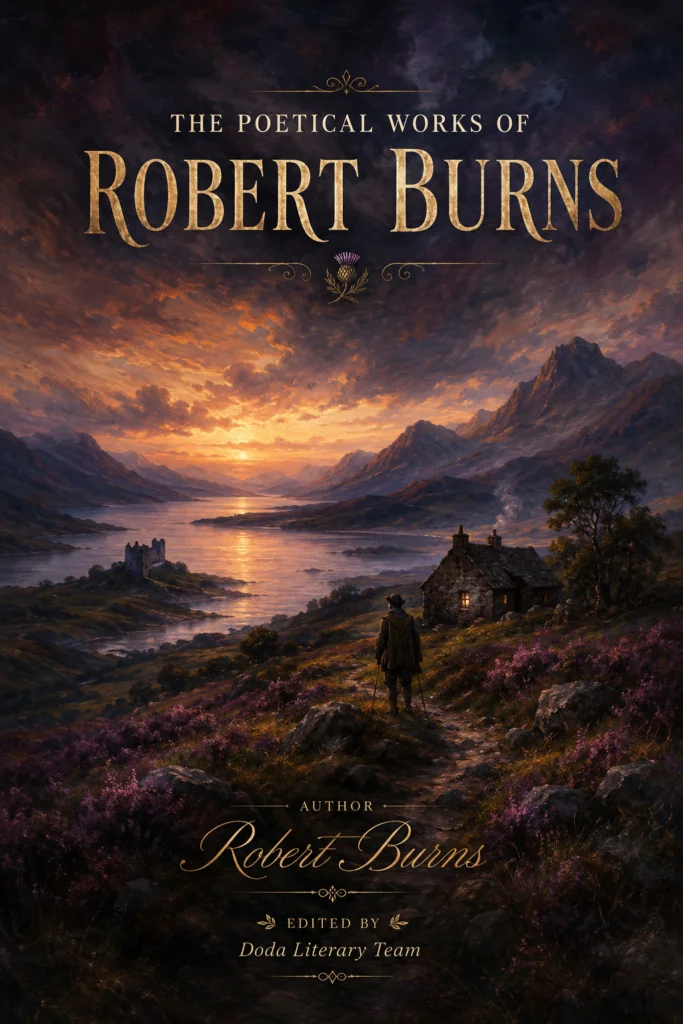
| Approach to Nature | Nature as mirror for human experience |
| Key Animal Poems | “To a Mouse,” “To a Louse” |
| Key Landscape Poems | “My Heart’s in the Highlands,” “Winter: A Dirge” |
| Key Flower Poem | “The Mountain Daisy” |
| Unusual Feature | Nature is harsh, not idealised |
| Farm Background | Burns grew up as a farmer’s son |
🐭 Animals as Teachers
“To a Mouse”
Burns’s most famous nature poem is not really about a mouse. It is about the fragility of all plans — human and animal. The mouse’s destroyed nest becomes a symbol for every failed dream. Burns treats the mouse with dignity, calling it a “fellow mortal” rather than a pest.
“To a Louse”
Burns sees a louse crawling on a wealthy woman’s hat in church and imagines what the louse would see if it could judge human behaviour. The poem uses a lowly insect to expose human vanity. It is funny, sharp, and unexpectedly profound.
“The Mountain Daisy”
Burns’s plough destroys a daisy. He compares the flower to a beautiful woman brought low by circumstances. The daisy is innocent and beautiful but has no control over its fate — just like the poor people Burns saw pushed around by the powerful.
📚 Explore all of Burns's nature poetry with annotations
👉 Get the Annotated Edition🏔️ Landscapes and Weather
“My Heart’s in the Highlands”
A short poem about longing for the Scottish Highlands. Burns was living in the lowlands when he wrote it. The landscape represents freedom, wildness, and home. It is pure nostalgia for a place he loved.
“Winter: A Dirge”
A bleak poem about winter as a metaphor for depression and loss. The cold, the bare trees, and the short days all reflect the speaker’s inner state. Burns uses weather to externalise what he feels inside.
🌿 What Burns Does Differently
Most nature poets of Burns’s time described nature as beautiful and perfect. Burns did not. His nature is harsh, unpredictable, and often destructive. The plough destroys. The winter freezes. The wind howls. This honesty makes his nature poetry feel more real than the idealised versions his contemporaries wrote.
🎯 What the Annotated Edition Unlocks
539 Poems Annotated
Every Burns poem — nature poems and all — with line-by-line explanations.
Scots Glossary
500+ Scots words defined and indexed for quick reference while reading.
Teacher's Insights
Stanza-level commentary explaining what Burns is doing with language and imagery.
Poem Summaries
Overview, context, themes, and devices for every poem in the collection.
Historical Notes
Explanations of Burns's farming background and Scottish rural life in the 1700s.
Beautiful EPUB Format
Works on Kindle, Apple Books, Kobo, and all major e-readers.
🏛️ Why Burns Knew Nature So Well
The reason Burns’s nature poetry feels so real is that it was written from day-to-day experience, not from observation. He was born in 1759 in Alloway, Ayrshire, and spent much of his life working on rented farms — ploughing, sowing, tending cattle, and fighting the Scottish weather year after year. He was not a gentleman poet gazing at a landscape from a safe distance; he was a labourer embedded in the land.
In the 1780s, Burns published his poems to huge success and moved briefly in Edinburgh’s fashionable literary circles, but he always returned to rural life. This double identity is central to his nature poems: he had the education and craft to turn a field event into a poem, but also the farmer’s knowledge of what that event meant. That authenticity is what the English Romantics, who came slightly after him, admired and tried to capture.
There is also a social dimension to his nature poetry that is easy to miss. Burns lived among the rural poor, and again and again he turns the fate of a small creature or flower into an image of human vulnerability. His nature poems are quietly political, insisting that the lowly deserve dignity. This is part of why To a Mouse and its famous line still resonate so widely.
🌱 Close Reading: The Creatures and Flowers
In “To a Mouse”, the speaker disturbs a mouse’s nest with his plough and apologises — but the apology opens onto a much larger reflection. The famous line, “The best-laid schemes o’ mice an’ men / Gang aft agley,” uses the mouse’s ruined nest as a mirror for every human plan that fails through no fault of its own. “Gang aft agley” means “often go awry.” Burns treats both the mouse and the failed plan with a gentle, almost solemn respect, calling the creature a “fellow mortal.”
In “To a Louse”, Burns spies a louse crawling across a bonnet in a crowded church and imagines what the tiny creature would see if it could judge human vanity. The closing couplet — “O wad some Pow’r the giftie gie us / To see oursels as others see us!” — means “O would some power give us the gift / To see ourselves as others see us!” It is funny and sharp, but the joke runs deeper: the louse, humble and unbothered by rank, has no idea it is on a grand lady’s hat, just as she has no idea how much of her vanity is visible to the world.
In “The Mountain Daisy”, Burns again turns a farming accident into poetry. His plough has cut down a tiny, modest daisy — “Wee, modest, crimson-tipped flow’r” — and he laments it with a tenderness he explicitly compares to the fate of an innocent woman brought low by forces beyond her control.
❄️ Close Reading: Landscape and Weather
“My Heart’s in the Highlands” is the simplest and most famous of the landscape poems. Written while Burns was away in the lowlands, it is built on a single repeated contrast between where the speaker’s body is and where his heart longs to be — “My heart’s in the Highlands, my heart is not here.” The Highlands symbolise freedom, wildness, and home, and the poem’s mounting images turn nostalgia into something almost physical — pure Romantic longing, decades before the Romantics made that note fashionable.
“Winter: A Dirge” shows the darker side of Burns’s nature. Here the season is not picturesque but hostile — the cold, the bare trees, and the long darkness all mirror the speaker’s grief and low spirits. By making the winter bleak, Burns lets the reader feel the speaker’s despair rather than just hearing it described. Together, the two landscape poems show the full range of his nature writing.
📖 How to Read These Poems and Why They Last
You do not need any special preparation to begin with Burns’s nature poems. Start with “My Heart’s in the Highlands,” which is almost fully comprehensible to a modern English reader, then move to “To a Mouse” once you are ready for some Scots vocabulary. Read each poem aloud — the music carries much of the meaning — and let the glosses fill in the rest. If you are newer to reading poetry, our guide for reading Scottish poetry as a beginner is a gentle place to start.
These poems last because they are built on something universal: the recognition that fragile, vulnerable things deserve compassion. Burns makes that feel personal rather than preachy. If you enjoy this side of him, his love poetry shows the same tenderness toward people.
❓ Frequently Asked Questions
Is "To a Mouse" really about a mouse?
On the surface, yes. But the mouse is a vehicle for a much larger meditation on fate, suffering, and the universal vulnerability of all living creatures. The poem is about human life, using the mouse as a mirror.
Did Burns write about nature differently from other poets?
Yes. Unlike Wordsworth or Keats, who often idealised nature as beautiful and sublime, Burns wrote about nature as harsh, unpredictable, and indifferent. He knew nature as work — ploughing fields, battling weather, managing animals.
What is the most famous nature poem by Burns?
“To a Mouse” is the most famous. Its line “The best-laid schemes o’ mice an’ men gang aft agley” has entered the English language, and John Steinbeck used it as the title for his novel Of Mice and Men.
What did Burns think of animals?
He treated animals with remarkable respect for his time. He calls the mouse a “fellow mortal” and addresses the louse with mock-ceremonial dignity. He saw all creatures as sharing the same fate — vulnerable, struggling, and worthy of compassion.
Are Burns's nature poems hard to read?
Some are, some are not. “My Heart’s in the Highlands” is very accessible. “To a Mouse” requires help with Scots vocabulary. “Winter: A Dirge” is straightforward. An annotated edition handles the difficult ones.
How many nature poems did Burns write?
About 40–50 poems deal directly with nature, animals, or the landscape. But nature imagery appears in many of his love poems and satires too — it was his primary source of metaphor.
What does "gang aft agley" mean?
It means “often go awry.” “Gang” is the Scots word for “go,” and “agley” means “askew” or “wrong.” The line from “To a Mouse” captures Burns’s gentle warning that even the best-laid plans can fail through no fault of our own.
Why is "To a Louse" set in a church?
Burns sets the scene in a crowded church to sharpen the contrast between outward respectability and inward vanity. The louse crawling on a fine lady’s bonnet in that solemn setting makes the poem’s satire all the sharper — even here, says Burns, we are all only human.
Are Burns's nature poems about the environment as we think of it today?
Not exactly. Burns was more interested in nature as a mirror of human life and as a source of empathy than in nature for its own sake. That said, his insistence that every creature deserves dignity and that the powerless deserve compassion anticipates modern environmental and ethical concerns in a striking way.
Which nature poem should I read first?
Start with “My Heart’s in the Highlands,” which is short and easy to follow, and try “The Mountain Daisy” next for a gently moving example of Burns’s empathy. Save “To a Mouse” for when you are ready to work through some Scots vocabulary with a glossary.