Reading Scottish poetry, especially Robert Burns, feels different from reading English poetry. The vocabulary is unfamiliar, the references are to a culture and history you may not know, and even the grammar follows different rules. Here is a step-by-step approach that turns confusion into comprehension.
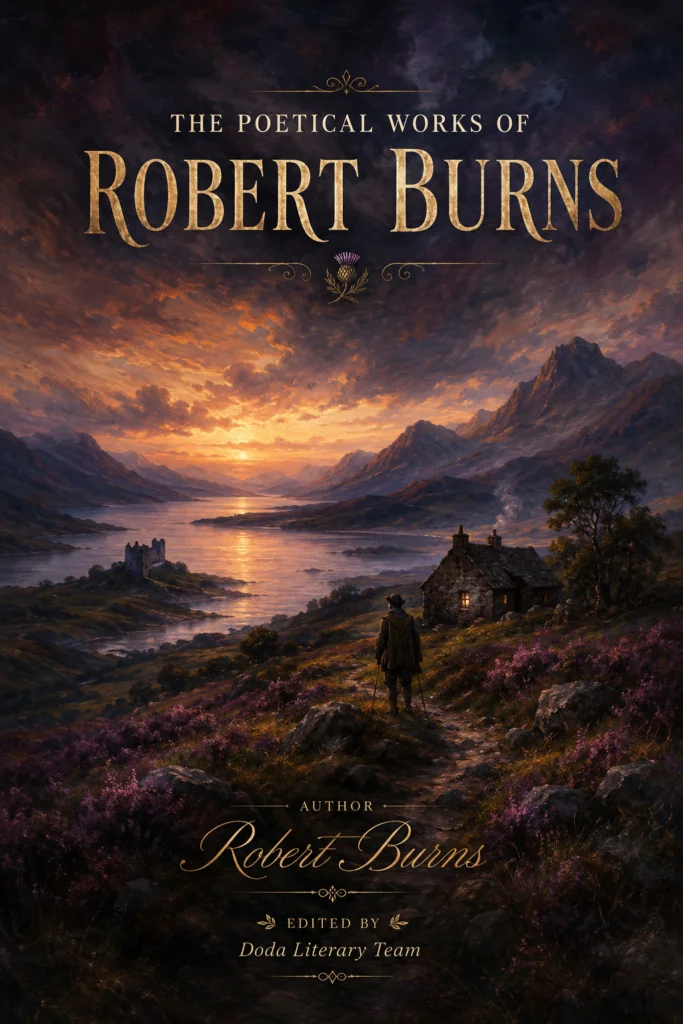
📖
How to Read Scottish Poetry: A Beginner's Guide
A step-by-step guide for reading Scottish poetry — how to handle Scots vocabulary, understand 18th-century references, and enjoy Robert Burns without getting lost.
| Method | 7-step reading process |
| Skill Level | Absolute beginner to intermediate |
| Best For | Readers new to Scots poetry |
| Key Tool | Annotated edition with glossary |
| Recommended Start | To a Mouse or A Red, Red Rose |
| Common Trap | Skipping the glossary |
📖 Step 1: Understand What You Are Reading
Scottish poetry from Burns’s era (1759-1796) is written in a blend of Scots and English. Scots is not a dialect of English — it is a separate language that evolved from Old English alongside standard English, with its own vocabulary, grammar, and pronunciation.
This means you cannot simply sound out Scots words and guess the meaning. Wabbit means exhausted. Sleeket means smooth. Drouthy means thirsty. You need a glossary.
What helps: A good annotated edition includes a comprehensive Scots glossary. The Poems and Songs of Robert Burns — The Annotated Edition has a cumulative glossary of 500+ entries with poem references, so you can look up any unfamiliar word and see where else Burns used it.
📝 Step 2: Read the Summary First
Before attempting the original text, read a one-paragraph summary of the poem — what happens, who is speaking, what the poem is about. This gives you a mental framework so you can focus on the language rather than trying to follow the plot.
In the annotated edition, each poem begins with a Poem Summary section covering overview, historical context, key themes, and literary devices. Read this first, every time.
🎙️ Step 3: Read Aloud
Burns wrote for the ear. His poems were meant to be performed, not silently decoded. Reading aloud forces you to engage with the rhythm and rhyme, and it often makes the meaning clearer because you hear the words in context.
Pronunciation tips:
- Scots vowels are broader than English vowels. “Auld” rhymes with “old,” not “bald.”
- The “ch” in Scots is the guttural sound from “loch” — the same as in German “Bach.”
- Final “-it” or “-et” is pronounced as a separate syllable: “want-it” not “wanted.”
🔍 Step 4: Use the Line-by-Line Approach
Do not try to understand an entire stanza at once. Work through it line by line:
- Read the line in the original Scots
- Identify unfamiliar words and check them in the glossary
- Read the line-by-line paraphrase from the annotations
- Re-read the original line — does it make more sense now?
- Move to the next line
After 4-5 lines, pause and re-read them together. Then do the next group.
Example — from To a Mouse:
| Step | Text |
|---|---|
| Original | “Wee, sleeket, cowran, tim’rous beastie” |
| Glossary | wee = small, sleeket = sleek, cowran = cowering, tim’rous = timid, beastie = little animal |
| Paraphrase | “Small, sleek, cowering, timid little animal” |
| Meaning | Burns describes a mouse he has just disturbed while ploughing |
📚 Start your Burns journey with the annotated edition — designed for exactly this reading process
👉 Get the Annotated Edition✏️ Step 5: Annotate as You Read
Write on your text. Circle Scots words, underline key images, mark places where the tone shifts. The physical act of annotating helps you remember and makes it easier to find evidence later for essays or discussion.
If you are using the annotated edition on an e-reader, use the notes or highlight feature for the same purpose.
💡 Step 6: Read the Teacher’s Insights After Each Poem
After you have understood what the poem says, read the analysis section. This covers:
- Thematic content — what the poem is really about
- Literary devices — how Burns creates effects through language
- Historical context — what events or ideas influenced the poem
- Structural choices — why Burns chose this form or metre
Do not read the analysis before the poem. The goal is to form your own interpretation first, then compare it to the expert reading.
🔄 Step 7: Re-Read After Analysis
This is the most important step. Once you know what the Scots words mean and what Burns is doing structurally, re-read the poem from start to finish without stopping. You will hear it differently — the rhythm will make sense, the word choices will feel intentional, and the poem will cohere as a whole.
⚠️ Common Beginner Mistakes
Mistake 1: Skipping the glossary. Every word you skip is a piece of meaning you lose. Look up everything.
Mistake 2: Reading silently. You miss half the poem’s effect. Burns’s meanings emerge through sound.
Mistake 3: Starting with Tam o’ Shanter. It is his most famous narrative poem, but it is 224 lines long. Start with a shorter poem like To a Mouse or A Red, Red Rose.
Mistake 4: Reading the analysis first. You rob yourself of the discovery. Form your own reading before consulting the experts.
🏛️ Scottish Poetry and the Age of Burns
Scotland in the 1780s had one of Europe’s liveliest literary cultures, with Edinburgh a hub of the Enlightenment, home to David Hume and Adam Smith. English was the language of print and polite society, while Scots was the language of the farm, the street, and the songbook — which is why Burns’s choice to write in Scots was so radical.
He published his first volume, the Kilmarnock edition of 1786, as a working farmer; within a year he was famous across Scotland. He drew on a long tradition of song and balladry, and on older poets like Allan Ramsay and Robert Fergusson who had already published in Scots. What Burns added was range: in a single collection he moves from a formal English elegy to the earthy humour of a drinking song. Keeping that double tradition in mind — folk song on one side, Enlightenment print on the other — makes every poem fall into place; the full story of that rise is in our guide to why Burns became Scotland’s national poet.
✨ Five Poems Worth Starting With
Not every Burns poem is beginner-friendly. These five are short, clear, and rewarding:
- A Red, Red Rose — four stanzas and some of the simplest Scots in the canon.
- To a Mouse — the most celebrated shift from comedy to tragedy in Scottish verse.
- Ae Fond Kiss — a farewell poem with a devastating ending, ideal for reading aloud.
- To a Haggis — a comic ode that shows off Burns’s playfulness before tackling anything heavy.
- Auld Lang Syne — you already know the tune; the full text is the easiest confidence boost in literature.
Read two or three of these before attempting longer narratives. The best Burns poems for beginners maps the wider journey poem by poem.
📝 Applying the Method Beyond Burns
The seven-step approach carries over to any Scots verse and to older English poetry too. Keep the Scots glossary open while you read — a lasting reference to more than 500 Scots words.
Once the method becomes automatic, a poem like Tam o’ Shanter stops being intimidating. Our line-by-line reading shows how far close commentary can take you.
📚 What the Annotated Edition Unlocks
539 Poems Annotated
Every poem with line-by-line explanations and Scots translations
Scots Glossary
500+ Scots words defined and indexed for quick lookup
Teacher's Insights
Stanza-level commentary for every poem explaining literary techniques
Poem Summaries
Overview, context, themes, and devices for each poem — read first
Historical Notes
Explanations of every 18th-century Scottish reference
Beautiful Formatting
Colour-coded card design, works on all major e-readers
❓ Frequently Asked Questions
What is Scots language?
Scots is a language that evolved from Old English alongside standard English. It has its own vocabulary, grammar, and pronunciation. It is not a dialect of English — it is a distinct language with official recognition in Scotland.
How is Scots different from English?
Scots retains many Old English and Norse words that standard English lost. For example, bairn (child), ken (know), bonnie (beautiful), and brae (hill). The grammar also differs — Scots uses different verb forms and sentence structures.
What is the easiest Burns poem to start with?
"To a Mouse" (8 stanzas, clear narrative, famous lines) and "A Red, Red Rose" (4 stanzas, simple vocabulary, universal theme) are the best starting points. Save "Tam o' Shanter" (224 lines, dense Scots) for later.
Do I need to know Scots to read Burns?
No — but you need a glossary. Burns wrote in a blend of Scots and English. With a good annotated edition that provides line-by-line translations, you can understand everything without prior knowledge of Scots.
Should I read Burns silently or aloud?
Aloud. Burns wrote for performance, not silent reading. The rhythm, rhyme, and sound effects are essential to the meaning. Reading aloud also helps you pronounce and remember Scots vocabulary more effectively.
How long does it take to get comfortable reading Burns?
After 5-10 poems with line-by-line annotations, most readers find the Scots vocabulary starts to feel familiar. The first few poems are the hardest. Each subsequent poem gets easier as you build your Scots vocabulary.
Is Burns the only Scottish poet worth reading?
No — he is the most famous, but he stands in a long line from the ballad-makers through Allan Ramsay and Robert Fergusson to Hugh MacDiarmid and Norman MacCaig. Burns is simply the easiest entry point: his songs move quickly and his Scots vocabulary is comparatively small.
What is the difference between Scots and Scottish Gaelic?
They are unrelated. Scots is Germanic, descended from Old English and close to standard English. Gaelic is Celtic, related to Irish and Welsh. Burns wrote in Scots; Gaelic was spoken in the Highlands and Hebrides. The two are not mutually intelligible.
Should I read Burns in the original Scots or a translation?
Read the original with an annotated edition beside you. Translations smooth away the rhythm and wordplay that made Burns popular; a glossary and line-by-line paraphrase let you keep the text while understanding every word.