The major Pride and Prejudice themes explained simply — love, class, pride, marriage, and why they still matter to modern readers. No literature degree required.
Pride and Prejudice Themes Explained in Easy Language
Underneath the romance, Austen explores who gets power, who doesn't, and how people navigate the gap between what they want and what's expected of them.
👉 Get the Annotated Edition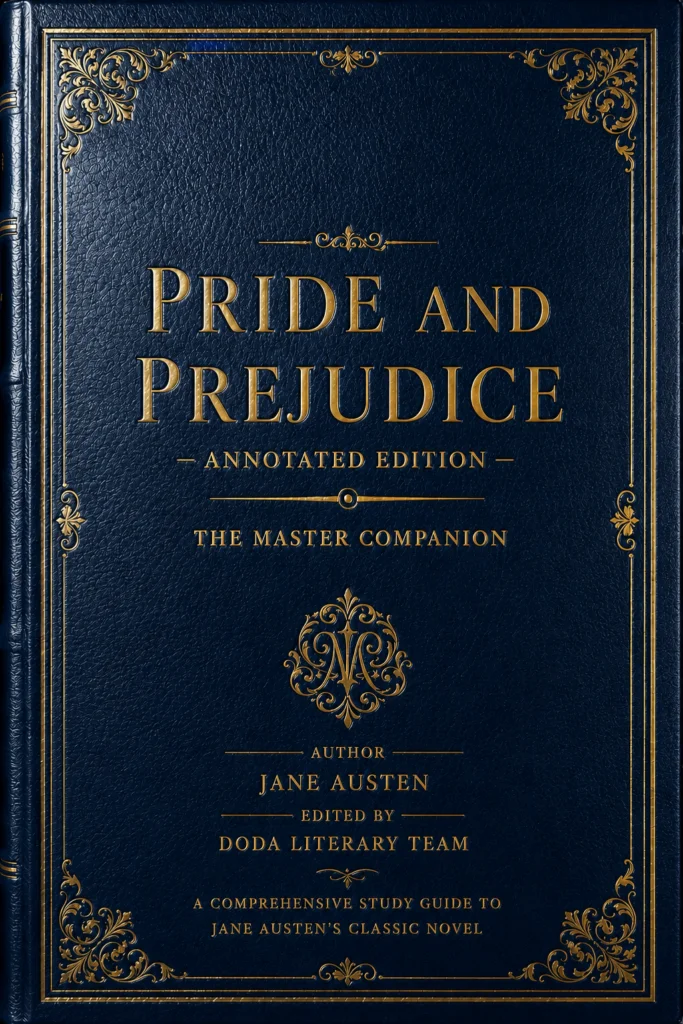
| Novel | Pride and Prejudice |
| Author | Jane Austen (1775–1817) |
| Published | 1813 |
| Original Title | First Impressions |
| Main Themes | Pride, prejudice, marriage, class, individual growth |
| Reading Time | 10–14 hours |
🎭 Pride — Darcy’s Arc
The novel’s title names its two central themes. Pride here means thinking too highly of yourself — specifically, valuing your own social position and judgment over everyone else’s.
Darcy’s pride is obvious: he looks down on people beneath his class, refuses to socialise with them, and proposes to Elizabeth while insulting her family. But his pride also manifests as excessive self-reliance — he believes his judgment is always correct, so he interferes in Bingley’s relationship without asking anyone’s opinion.
The lesson: Darcy has to learn that being wealthy and well-born doesn’t make him better. His goodness comes from his actions, not his status.
👁️ Prejudice — Elizabeth’s Arc
Prejudice is judging someone without full information. Elizabeth prides herself (there’s that word again) on being a good judge of character. She’s not. She forms an opinion of Darcy at a ball based on one rude comment and spends half the novel interpreting everything he does through that lens.
Wickham exploits this. He tells Elizabeth a story that confirms her bias, and she never questions it. She’s not stupid — she’s prejudiced. She sees what she expects to see.
The lesson: Elizabeth has to learn that her first impressions aren’t always right. Being clever doesn’t mean being correct.
💍 Marriage as Economics
Here’s the theme modern readers miss most often. In 1813, women could not:
- Inherit property (it went to the nearest male relative)
- Work in respectable professions
- Propose marriage
- Live independently without being considered a burden
For the Bennet sisters, marriage isn’t romantic — it’s survival. When Mr. Bennet dies, their home goes to Mr. Collins. They’ll be homeless unless they’re married.
This explains Mrs. Bennet’s obsessive matchmaking. She’s loud and embarrassing, but she’s also the only parent thinking about the future. Mr. Bennet hides in his library, having failed to save money or plan for his daughters’ security. Mrs. Bennet is the one trying to keep them safe.
📚 Every chapter's themes explained in detail — get the annotated edition
👉 Buy the Annotated Edition🏛️ Class and Social Hierarchy
Austen’s world has rigid social classes. Darcy is at the top (landed gentry, £10,000/year). The Bennets are middle (gentry but modest income). The Gardiners (Elizabeth’s aunt and uncle) are tradespeople — respectable but lower status.
Darcy’s aunt Lady Catherine is furious at the idea of Darcy marrying Elizabeth because she’s beneath him socially. But Darcy eventually decides that Elizabeth’s personal qualities matter more than her class. This was a progressive idea for 1813.
🌱 Individual Growth
The novel’s deepest theme might be that people can change. Darcy works on his pride. Elizabeth works on her prejudice. Neither transformation is instant — it takes months of reflection and effort. Austen is saying that good character isn’t something you’re born with. It’s something you build.
🔥 Why These Themes Still Matter
Two hundred years later, we still struggle with:
- Judging people by first impressions (social media makes this worse)
- Confusing wealth with worth
- Making life decisions based on financial pressure rather than personal desire
The situations in Pride and Prejudice are different, but the human challenges are the same. That’s why the novel still resonates.
📦 What the Annotated Edition Unlocks
242 Literary Annotations
Historical context, critical analysis, and literary allusions for every chapter — understand why Austen chose certain words and what Regency-era social rules mean for the plot.
139 Modern Simplifications
Complex passages rewritten in clear modern English. When Austen's sentences get dense, you'll find a plain-English breakdown right there on the page.
Chapter Summaries
Every chapter begins with a concise 150–250 word recap of key events — perfect for quick orientation before you read or for revision after.
76 Discussion Questions
With original answers. Perfect for teachers planning classroom activities, book clubs preparing for meetings, or students writing essays.
Character Relationship Maps
Detailed profiles of every major character with relationship diagrams showing how Elizabeth, Darcy, Bingley, Jane, Wickham, and the rest connect.
Bonus Resources
Story timeline, chapter length bar chart, 10-question quiz with answers, comprehensive glossary of 143 archaic terms, and further reading recommendations.
📖 The Story in One Paragraph
When the wealthy Mr. Bingley takes nearby Netherfield Park, Mrs. Bennet has one goal: marry a daughter to him. His friend Mr. Darcy, prouder and richer, offends Elizabeth Bennet at a ball, and she decides he is the worst man in England. A handsome soldier named Wickham then confirms her prejudice with a convincing story about Darcy’s cruelty. Bingley leaves Jane, Darcy proposes insultingly and is refused, and a letter arrives that pulls Elizabeth’s version of events apart. Darcy secretly rescues the Bennet family after Lydia elopes with Wickham, Elizabeth realises who actually loves her and who she truly loves — and both finally admit they were wrong. It is a perfect plot driven entirely by two clever people misreading each other until they are forced to read themselves.
👨👩👧👦 Theme: Family and Sisterhood
Austen rarely leaves Elizabeth alone, and family is one of the novel’s most sympathetic themes. The five Bennet sisters are a running study in different dangers: Jane’s trusting sweetness, Elizabeth’s sharp judgment, Mary’s learned affectation, Kitty’s suggestibility, and Lydia’s heedless passion. Elizabeth’s love for Jane is the most stable relationship in the book, and her candid bond with her father is its tenderest. But families are also engines of embarrassment — Mrs. Bennet’s theatrical matchmaking, Lydia’s scandal, Lady Catherine’s sneers — and Austen’s point is double-edged. Elizabeth has to accept that she is her family, flaws included, and that loving someone means choosing them with open eyes. If the five sisters ever blur together, our character guide keeps every one of them straight.
🗣️ Theme: Reputation and Scandal
In Austen’s world a reputation is a currency that can be spent exactly once. Lydia’s elopement with Wickham is not a girlish prank — it threatens the marriage prospects of all four sisters because one family scandal rubs off on everyone. Wickham understands that economy perfectly: he trades on charm and on Darcy’s stubborn refusal to explain himself. Elizabeth’s own reputation — her sharp tongue, her frank answer to Lady Catherine — is a quieter rebellion the novelist quietly admires. The theme connects to the title itself: reputation is what the world sees, while character is what you are when the world is not looking.
✍️ How to Read a Novel for Themes
You do not need a literature degree to read thematically. Pick a single lens — money, family, reputation, first impressions — and follow it through the story, noting every scene where it surfaces and every character it helps or wounds. Ask who wins when the theme is tested and who loses, and what Austen wants you to feel about that balance. The annotated edition was built for this: chapter summaries surface each section’s theme, discussion questions test your reading, and the notes reveal what Regency readers would have known automatically. If the climax of the book is your weak spot, our walk-through of the ending explains the resolution phase by phase, and the story of Elizabeth and Darcy traces the central relationship from the ball to the final proposal.
❓ Frequently Asked Questions
What is the main theme of Pride and Prejudice?
The novel has two central themes that work together: pride and prejudice. Darcy must overcome his class-based pride, and Elizabeth must overcome her prejudice based on first impressions. Together they show that self-awareness and personal growth are essential for true love.
How does Austen use marriage as a theme?
Austen presents marriage as both an economic necessity and a personal choice. Charlotte Lucas marries Mr. Collins for security (a practical but loveless match). Elizabeth marries Darcy for love (an ideal match). Lydia marries Wickham for passion (a disaster). Every marriage in the novel represents a different economic and emotional arrangement.
What is the role of class in Pride and Prejudice?
Class determines almost everything in Austen’s world — who you can marry, where you can live, and how people treat you. Darcy initially sees Elizabeth as beneath him. Lady Catherine tries to prevent their marriage because of class. But the novel argues that character matters more than social rank.
Why is Mrs. Bennet so obsessed with marriage?
Because the Bennet estate is entailed to Mr. Collins — a male relative. When Mr. Bennet dies, Mrs. Bennet and her five daughters will be homeless unless the daughters are married. Mrs. Bennet’s matchmaking isn’t just embarrassing; it’s a desperate attempt to keep her family from destitution.
What does Darcy learn by the end of the novel?
Darcy learns that pride based on social status is hollow. He humbles himself, helps Elizabeth’s family despite Wickham’s betrayal, and proposes again without mentioning her class or family. His transformation shows that good character is built through effort and self-reflection.
What does Elizabeth learn by the end of the novel?
Elizabeth learns that her judgment isn’t infallible. She trusted Wickham because he was charming and condemned Darcy because he was rude. She has to admit she was wrong about both — a painful but necessary lesson in humility and self-awareness.
Are the themes of Pride and Prejudice still relevant today?
Absolutely. We still judge people by first impressions, confuse wealth with worth, and make life decisions under financial pressure. The novel’s exploration of pride, prejudice, and personal growth speaks to timeless human challenges that social media has only made more complicated.
How do I choose which theme to write my essay on?
Pick the theme with the most textual landmarks you can actually quote. Pride and prejudice have the biggest arsenal — the ball, the proposal, the letter. Marriage runs through every subplot, and class comes to a head with Lady Catherine. Our study guide’s exam topics table maps each theme to its key chapters and arguments.
Does the annotated edition help with theme analysis?
Continuously. Chapter summaries surface each section’s theme before you read, the 242 annotations point out when Austen is quietly working on class or pride, and the 76 discussion questions with sample answers train you to write theme-focused paragraphs instead of plot summaries.
📚 Related Articles
Get the Annotated Edition
242 annotations, 139 simplifications, 76 discussion questions, and complete character analysis — all in one beautifully formatted EPUB.
- ✅ All 61 chapters annotated line by line
- ✅ 139 modern simplifications for difficult passages
- ✅ 76 discussion questions with answers
- ✅ Character maps, glossary, quiz, and more