Here is a structured 3-day plan for how to revise Pride and Prejudice before exams — covering plot, characters, themes, quotes, and practice questions. This assumes you have already read the novel and need to consolidate.
Revise Pride and Prejudice in 3 Days
A structured exam revision plan covering five key scenes, five main themes, timed essays, and the most common mistakes students make.
| Day | Focus | Time Required |
|---|---|---|
| Day 1 | Plot and characters | 3.5 hours |
| Day 2 | Themes and analysis | 3.5 hours |
| Day 3 | Exam practice and review | 3 hours |
Day 1: Plot and Characters
Morning (2 hours): Re-read chapter summaries for all 61 chapters. Focus on the five key scenes: the Meryton ball (Ch. 3), Collins’s proposal (Ch. 19), Darcy’s first proposal (Ch. 34), Darcy’s letter (Ch. 35–36), and Lady Catherine’s visit (Ch. 56). For each scene, write down what happens, who is involved, and how it changes the story.
Afternoon (1.5 hours): Create a character relationship map. Elizabeth (heroine, intelligent, biased) is the center. Darcy (hero, proud, honourable) is her love interest. Jane (closest confidante), Bingley (Jane’s love), Wickham (villain, charming), Collins (fool, obsequious), and Lady Catherine (antagonist, arrogant) all connect through Elizabeth.
Day 2: Themes and Analysis
Morning (2 hours): Master the five main themes with one quote each. Pride: “She is tolerable, but not handsome enough to tempt me” (Darcy). Prejudice: “I could easily forgive his pride, if he had not mortified mine” (Elizabeth). Marriage: “Happiness in marriage is entirely a matter of chance” (Charlotte). Self-knowledge: “Till this moment, I never knew myself” (Elizabeth). Class: “In vain I have struggled… your inferiority” (Darcy).
Afternoon (1.5 hours): Write out three sample essay paragraphs using the P.E.E.L. structure: Point, Evidence, Explanation, Link. Practice how Austen uses irony in the opening chapter, how Elizabeth’s character develops, and what role money plays in the marriage plot.
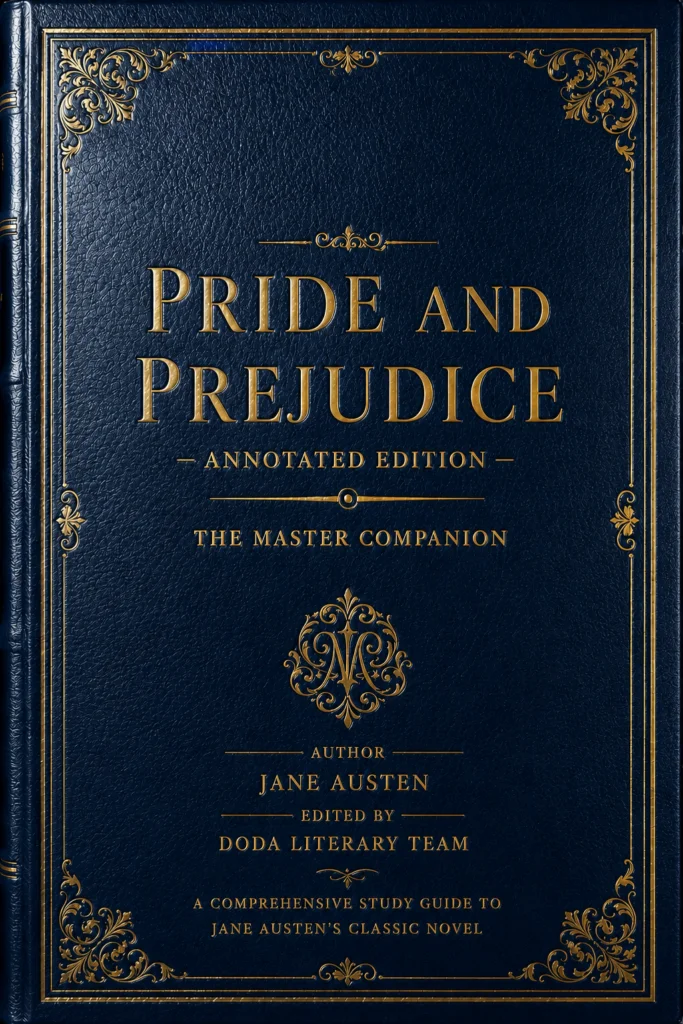
Get exam-ready with chapter-by-chapter analysis. The annotated edition includes quote guides and essay prompts for every section.
Get the Annotated EditionDay 3: Exam Practice
Morning (2 hours): Write two full essays under timed conditions (45 minutes each). Try “Elizabeth Bennet is blinded by her own prejudice. Discuss” and “Pride and Prejudice is not a love story — it is a social critique. Do you agree?”
Afternoon (1 hour): Review your essays. Check: did you use specific quotes (not paraphrases)? Did you discuss more than one character? Did you link your points to Austen’s purpose?
Common Exam Pitfalls
The most common mistakes: calling Darcy a villain (trace his growth instead), forgetting Wickham’s deception (he is the real villain), ignoring Charlotte’s marriage (use it for social critique), no historical context (mention entailment and courtship rules), and only quoting Elizabeth (use Darcy, Charlotte, and the narrator too).
Key Scenes
Five pivotal moments that drive the entire plot.
Character Map
Relationships and traits for every major figure.
Theme Quotes
One quote per theme with analysis ready.
Essay Structure
P.E.E.L. framework for every exam question.
Timed Practice
Two full essays under exam conditions.
Pitfall Checklist
Avoid the five most common exam mistakes.
📖 What the Exam Is Really Testing
Revision sticks when you know what you are being marked on. Most Pride and Prejudice exams reward four things, and it pays to chase all four.
Precise text. Examiners want specific scenes and specific lines, not vague paraphrase. “There is a dance where everybody meets” earns less than “at the Meryton assembly, Darcy tells Bingley that Elizabeth is ’tolerable, but not handsome enough to tempt me’ — and Elizabeth, listening nearby, never forgets.” One nailed scene beats a paragraph of summary.
An argument. Answer the question. A good essay does not narrate the plot; it makes and defends a claim, then tests it against the text. After every paragraph ask yourself: am I proving something, or just describing?
Context that explains, not decorates. Mentioning entailment only matters if you connect it to the Bennet sisters’ peril. The daughters cannot inherit Longbourn, so their futures depend on marriage — link the legal fact to the plot and it becomes evidence, not name-dropping.
The author at work. Examiners reward attention to how Austen writes: her verbal irony, the way the narrator slips inside Elizabeth’s thoughts, the comic set-pieces of proposals and visits, the letter chapters that reverse the story. Show the hand at work behind the scenes.
🏛️ Historical Context Worth Carrying
Four pieces of context earn their weight in nearly every essay. Entailment — Longbourn is entailed to Mr. Collins as the nearest male heir, so the Bennet daughters have no inheritance; that single legal fact powers the whole plot, and it explains Charlotte’s acceptance of Collins as economic survival. Courtship rules — women do not propose, and a public scandal can damage a whole family’s chances, which is why Lydia’s elopement is a catastrophe rather than a mere embarrassment. Marriage as livelihood — Jane Austen did not write marriage simply because she liked weddings; for women without fortunes it was a career, and the novel is brutally honest about that. Class and manners — Darcy’s manners offend before his pride does, and Lady Catherine’s rank is her only argument; Austen satirises a society that mistakes birth for worth, and the joke lands harder when you know how seriously Regency England took it.
✍️ Five Themes, Five Ready-Made Essay Angles
Whatever the question, you can steer toward a theme you own. Pride — Darcy’s pride is real and then corrected; trace where it costs him (the assembly, the first proposal) and where he lays it down (Pemberley, the final proposal). Prejudice — Elizabeth’s cleverness is also her blindfold; she is wrong about Wickham and Darcy because she wants to be. Marriage — Lydia’s, Charlotte’s, Jane’s, and Elizabeth’s matches form a four-point argument about what marriage should be. Class and money — every major match in the novel negotiates income and rank. Self-knowledge — “Till this moment, I never knew myself” is the novel’s hinge; follow who learns it, and in what order.
A serviceable essay skeleton: thesis in the introduction; three paragraphs, each a scene-and-quote proof of one angle; a conclusion that returns to Austen’s purpose — comedy as a correction of society’s follies. For deeper reading on any of the five, our themes explained in easy language breaks them down for exam use, and the 15 most famous quotes come pre-analysed so you can drop them into answers with confidence.
🧠 Techniques That Actually Stick
Material goes in better when it goes in several ways. Anchor each of the five key scenes to one quote, one theme, and one character insight, and you end up with five portable knowledge bundles instead of a wall of text. Hand-write the ten to twelve quotes on index cards with the speaker and situation, then shuffle until the context comes automatically. Explain each theme out loud to someone (or a pillow) — teaching forces you to find the sentence you actually understand. And practise under the real constraints: closed book, timed, one essay a day in the week before the exam. Spaced repetition beats a single heroic cram every time.
📖 If You Have Not Read It (or Have Forgotten It)
Be honest about where you are. If the novel is a distant blur, the complete chapter-by-chapter summary rebuilds the scaffolding in an hour, and the 15-minute plot summary gives you the skeleton fast. Then spend remaining time where the marks live: the five key scenes, the five themes, and the quotes. If reading feels impossible now, the free LibriVox audiobook lets you absorb the novel in roughly 12 hours while you commute; our listen-along plan turns the audio into a guided read-through. However you rebuild the story, end with the key scenes — they are what the essay questions are built on.
Frequently Asked Questions
Can I revise in less than three days?
Yes, but you will need to prioritise. Focus on the five key scenes and five main themes. Skip the full essays and instead plan them out in bullet points.
How many quotes do I need to memorise?
Ten to twelve well-chosen quotes are sufficient for most exams. One per theme plus a few for character analysis.
Do I need to know all 61 chapters?
No. Focus on the chapters containing the five key scenes. The rest you can summarise from a chapter guide.
What if I have not read the novel yet?
Read the chapter summary guide first (Day 1 condensed), then jump to themes and quotes. You will pass, but a full reading is better.
How do I remember quotes for the exam?
Write each quote on an index card with the speaker and context. Review the stack three times on Day 1 and once each on Days 2 and 3.
What should I do the night before the exam?
Review your quick reference card. Do not try to learn anything new. Sleep well — a rested brain recalls better than a crammed one.
How should I practise with past papers and essay questions?
Plan first: five minutes to jot a thesis and three evidence points, then write the essay under time. Even one planned answer a day beats staring at a blank page when the exam arrives. A bank of extra questions lives in our assessment guide.
How much historical context do I actually need?
Four facts cover most marks: the entailment, the courtship rules, marriage as economic survival, and the class structure Austen satirises. Connect each to a scene — context earns marks when it explains the plot, not when it is listed.
Is it worth listening to the audiobook while revising?
Yes, as a scaffold rather than a replacement. Listening fixes the story, the names, and Austen's ironic tone in your memory while you do other things. Spend your focused hours on scenes, quotes, and essays.
📚 Related Articles
Ace Your Exam
- Chapter-by-chapter analysis for every section
- Key quotes with context and analysis
- Essay prompts and sample paragraphs