Most people read classic books the wrong way — opening page one cold and hitting unfamiliar vocabulary, long sentences, and lost context. Here is a practical system for how to read classic books faster without actually skipping anything.
Read Classics Faster Without Skipping
A practical three-pass system that cuts reading time in half while improving comprehension — tested on Pride and Prejudice.
| Metric | Without System | With System |
|---|---|---|
| Time per classic | 10–15 hours | 6–9 hours |
| Re-reading needed | Often | Rarely |
| Context lookups | During reading | Before reading |
| Comprehension | Partial | Complete |
The Problem with Reading Classics
The barrier to classic literature is not intelligence — it is unfamiliarity. The author assumes you know the social rules, historical events, and literary conventions of their time. You do not. So you read slowly, re-read, and still miss things. The solution: front-load the unfamiliar context before you read.
The Three-Pass System
Pass 1: The Map (15 minutes per 100 pages). Before reading the novel, read chapter summaries, a character list, and relevant historical context. This creates a mental map so you spend zero time wondering what is happening.
Pass 2: The Read (normal speed). Read the book at your natural pace. With the map already in your head, all your brainpower goes to understanding the language and subtext rather than tracking the plot.
Pass 3: The Review (optional). Skim chapter summaries again and note themes, quotes, or patterns. This moves content from short-term to long-term memory.
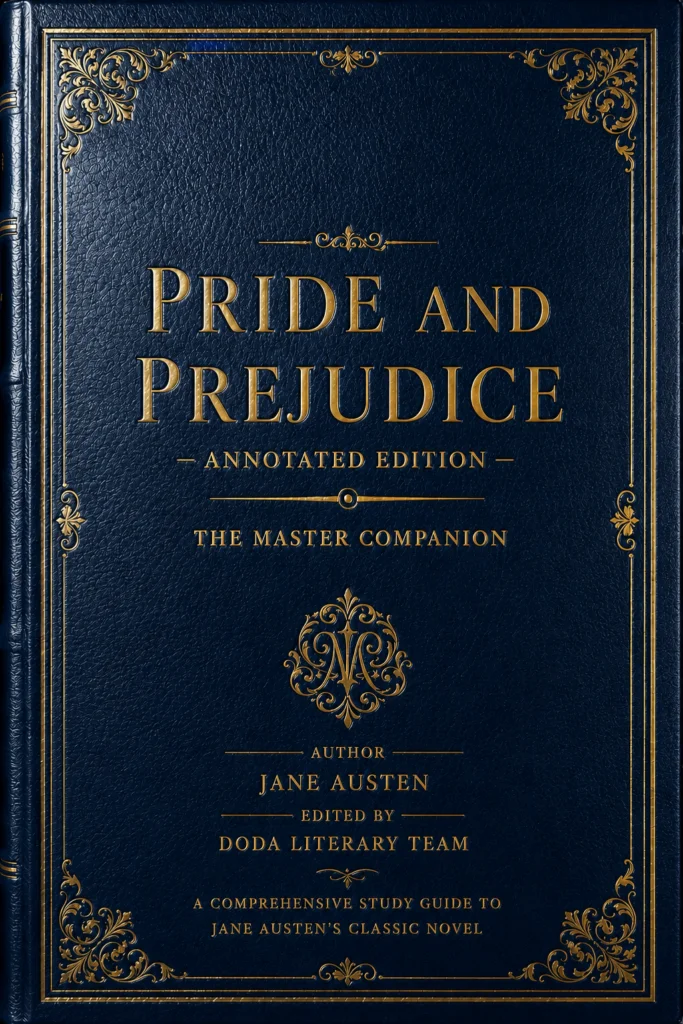
Ready to try the system? The annotated edition gives you the perfect Pass 1 map with chapter-by-chapter context.
Get the Annotated EditionHow This Changes Reading Speed
Without the system, readers re-read sentences, look up context while reading, get stuck on chapter one, and forget what happened ten chapters ago. With the system, they read once with full understanding, already know the context, know the entire arc, and maintain connected understanding throughout.
Example: Pride and Prejudice
Using this system with Pride and Prejudice: the Map phase takes about 45 minutes (chapter guide, character list, Regency context). The Read phase takes 8–10 hours at one or two chapters per session. The Review phase takes 30 minutes. Total: about 10 hours for comprehension that would normally take 14+ hours.
Additional Speed Techniques
Skip descriptive passages on first read. Austen’s descriptions of landscapes and houses matter less than dialogue. Read the first sentence of every paragraph — classic authors often put the main idea there. Cluster reading — one or two chapters nightly rather than bingeing — helps your brain consolidate information during sleep.
Map First
Pre-read summaries and character lists before the novel.
Read Naturally
Your natural pace works once context is pre-loaded.
Review Fast
Skim summaries afterward to lock in understanding.
Skip Descriptions
Prioritise dialogue and plot on the first pass.
Short Sessions
Two to three chapters max per sitting keeps focus sharp.
Use Annotations
Explanations alongside the text eliminate context lookups.
🧭 Why the Map Phase Makes or Breaks the Read
The single biggest mistake readers make is skipping the map. We think of reading as “sit down and open the book,” and any prep before that feels like work we didn’t sign up for. But consider what actually slows you down when you read cold: you meet a character you cannot place, you do not know whether a line is sincere or ironic, and you are never quite sure how the scene you are in fits the story the author is building. Every one of those moments is a small stall — and they compound into a reading experience that feels twice as long as it is.
The three-pass system removes those stalls at the source. A good chapter summary tells you where the scene sits in the arc. A character list keeps names and relationships straight from the first page. And a little context — what a Regency ball actually involved, what “settling an entail” means, why a good marriage was a young woman’s security — turns confusing turns of phrase into understood joke. Your brain then spends its energy on what the author is actually doing: the irony, the subtext, the craft. That is the difference between finishing a classic and enjoying one.
For Pride and Prejudice specifically, if you want a head start on the whole map, our beginner’s guide walks you through the characters, the setting, and the social rules before you turn a single page.
⏱️ A Realistic Chapter-by-Chapter Schedule
The system only helps if you actually finish, so plan a schedule you can keep. Pride and Prejudice runs sixty-one chapters organized into three volumes. A workable plan looks like this:
Week one — the map, plus early chapters. Spend your first sitting building the map: roughly forty-five minutes on a chapter summary, character list, and Regency primer. Then read the first volume (the opening and the Netherfield ball) at two chapters per session.
Week two — the middle. The second volume contains the great hinge of the novel — Darcy’s first proposal and Elizabeth’s famous refusal, the letter that reframes everything, and the arrival of Mr. Collins and Lady Catherine. This is where the plot thickens and where most readers get lost if they did not map ahead.
Week three — the finish. The third volume covers Lydia’s elopement, Darcy’s second proposal, and the two marriages that close the book. Keep the same two-chapters-a-session rhythm and use the Review pass at the end to lock in the major reversals.
If you want a more granular breakdown to pace yourself, our chapter-by-chapter summary gives you the arc of every single chapter so you always know where you stand.
🏛️ Historical & Cultural Context Worth Knowing
A little Regency context does more for your reading speed than any speed-reading trick, because most of what feels “fancy” or “long-winded” in Austen is actually social shorthand you simply have not been taught to decode.
The most important fact to internalize: for a young woman of the Bennet sisters’ standing, marriage was not a romantic luxury but an economic necessity. The Longbourn estate is entailed to a male cousin, Mr. Collins, which means the five Bennet daughters stand to inherit nothing. Suddenly Elizabeth’s rejection of Collins — and her mother’s fury at it — makes perfect sense, and Darcy’s wealth stops being a fairy-tale detail and becomes the engine of the whole plot.
Likewise, understand who is “above” whom. Mr. Darcy outranks everyone socially because of his family, estate, and ten thousand a year; Elizabeth’s uncle in trade places her family beneath the snobbery of Caroline Bingley and Lady Catherine de Bourgh. Almost every cruel remark in the book runs on this hierarchy. Hold these facts in your head and entire chapters read at comprehension speed instead of tape-loop speed. For a deeper dive into the social world that shapes every scene, the complete guide to Pride and Prejudice puts the whole Regency context into one place.
✍️ Know When to Speed Up and When to Slow Down
The three-pass system is not about reading every sentence at top speed — it is about spending your attention where it pays. In a novel of manners like this one, dialogue and interior monologue are where the plot and the comedy live, so read those at full attention. By contrast, Austen’s descriptions of houses, carriages, and the weather are often seasoning rather than substance; on a first read you can skim them and still lose nothing important.
A good rule of thumb: if a paragraph advances the relationship between two characters, read it closely. If it merely sets the scene, let your eyes move quickly. Combined with the map, this lets you finish in roughly the 6–9 hour range the system promises — while a reader going cold often spends 14+ hours and still misses the joke about Mr. Collins. You are not skipping content; you are deciding, with full knowledge of the story, where each kind of attention is actually required.
✨ Why the Annotated Edition Is the Ideal Partner
The three-pass system works with any edition of a classic — but it works fastest with one that builds the map right into the reading itself. With the annotated edition, you do not need to juggle a separate summary and a separate context guide: the chapter-by-chapter notes, character guides, and historical context sit alongside the text where you need them.
That matters for the Review pass especially. Instead of digging out a separate reference to confirm you understood a scene, you can glance at the annotation on the page and immediately confirm or correct your reading. It turns the three-pass system from something you have to manage into something the book quietly does for you. If you are the kind of reader who wants the map and the text in one hand, this edition is the shortcut.
❓ Frequently Asked Questions
Does this system work for any classic?
Yes. The three-pass approach works for any difficult text — Dickens, Tolstoy, Melville, or Austen. The key is always the same: front-load context before reading.
Will I miss the author's style by reading summaries first?
No. Knowing what happens lets you focus on how the author writes rather than what happens. You actually appreciate the style more.
How long does the Map phase take for Pride and Prejudice?
About 45 minutes to read a good chapter summary guide, character list, and a short primer on Regency-era social rules.
Can I use audiobooks with this system?
Absolutely. Listen to the audiobook for Pass 1 (story comprehension), then read an annotated edition for Pass 2 (depth and analysis).
Is this considered cheating?
Not at all. Professional readers — academics, critics, editors — use this exact approach. Preparation is not cheating; it is strategy.
What if a spoiler ruins the reading for me?
For most people a spoiler actually helps comprehension rather than harming it — you can focus on how the author builds toward an outcome instead of wondering what happens. If you genuinely prefer to stay surprised, build the map with character and context notes only, and skip the plot-outcome parts of the summaries until after you read.
How do I fit reading a long classic into a busy week?
Break it into short, consistent sessions rather than one long binge. Two chapters at a time, three or four evenings a week, fits around work or school and lets your brain consolidate what you read overnight. The three-pass map means every one of those short sessions is productive, because you never waste time reorienting yourself.
Can I combine this system with listening to the audiobook?
Yes — in fact this is a popular hybrid. Use the audiobook for your first pass through the story so you get the plot and characters in your ears, then read the annotated edition for the second pass where you want the depth, the subtext, and the historical notes that audio alone won't give you.
📚 Related Articles
Start Reading Smarter Today
- Chapter-by-chapter summaries for your Map phase
- Character guides and historical context included
- Vocabulary notes for every tricky passage