If you find Pride and Prejudice boring, it is probably not the novel — it is the way you are reading it. Austen wrote for a world without Netflix. Here is how to stay engaged from first page to last.
How to Not Be Bored by Pride and Prejudice
Proven techniques to stay engaged while reading Pride and Prejudice — skimming strategies, active reading tips, and why annotated editions keep you hooked.
| Biggest boredom cause | Slow pacing — nothing happens on the surface |
| Best fix | Treat conversations as chess matches |
| Skimming method | Read first/last paragraph of each scene |
| Secret weapon | Annotated edition with inline explanations |
| Reading pace | Max 2 chapters per sitting |
| Total chapters | 61 |
🧠 Why Readers Get Bored (And How to Fix Each Reason)
Nothing Happens for Long Stretches
Austen spends entire chapters on conversations in drawing rooms. No battles, no murders, no dramatic chases. The drama is all internal — a character says something they should not, misinterprets someone else’s meaning, or realises something embarrassing about themselves.
Fix: Treat every conversation as a chess match. Each character is trying to achieve something — a proposal, a compliment, a piece of information. Ask yourself: what does this person actually want?
I Cannot Follow Who Is Saying What
Austen’s dialogue attribution can be sparse. She will write three pages of conversation without saying “Elizabeth said” or “Darcy replied.”
Fix: Read dialogue aloud in your head with exaggerated voices. Give each character a mental accent or tone. It forces you to track who is speaking.
The Sentences Are Too Long
A single Austen sentence can run 80+ words. By the time you reach the full stop, you have forgotten the beginning.
Fix: Break long sentences at every comma. Read each clause as a separate unit. If a sentence feels impossible, re-read it from the last full stop.
🔍 Active Reading Techniques
Do not read passively — engage with the text:
- Summarise each chapter in one sentence after you finish it. If you cannot, you were not paying attention.
- Predict what will happen next. Austen plants clues. Try to guess the outcome before it arrives.
- Track one character per read. Read once following Elizabeth’s perspective. Read again following Darcy’s. They experience completely different novels.
⏩ The Skimming Method That Works
For sections that genuinely drag (the first half of the Collins proposal scene, for example):
- Read the first paragraph of a scene to establish context
- Read the last paragraph to catch the outcome
- Skim the middle for important quotes
This works because Austen telegraphs important moments. When a proposal is coming, you will know. When a crucial realisation arrives, the language shifts.
📚 Turn passive reading into active learning
👉 Get the Annotated Edition✨ The Secret: Annotations Keep You Engaged
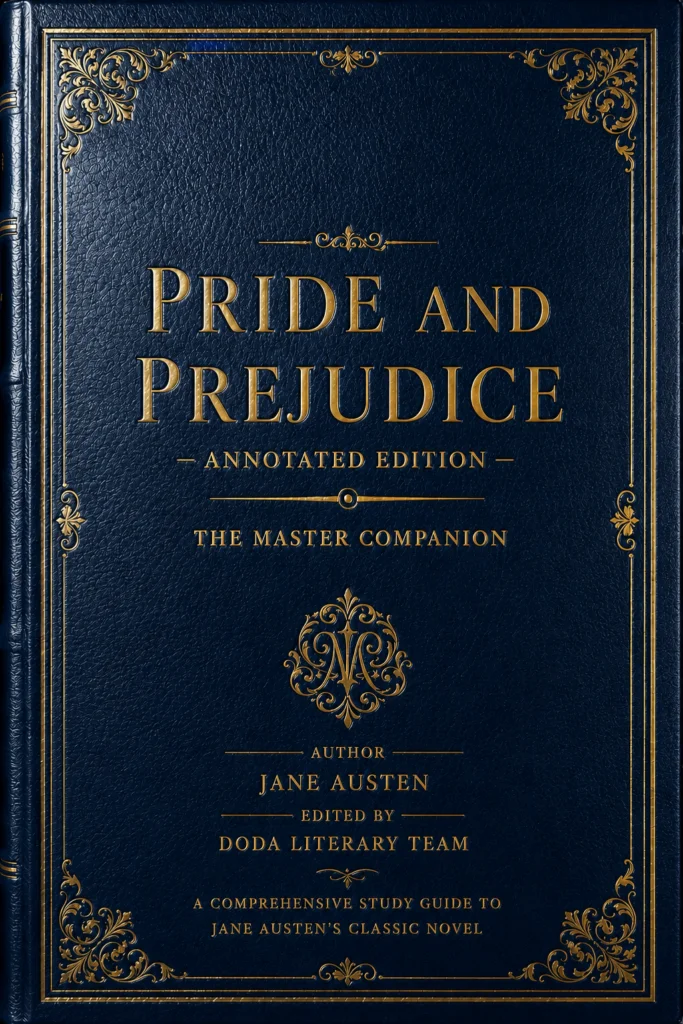
The most effective way to stay interested is to read an edition that explains what is happening as it happens. Instead of guessing at a joke and moving on, you see why it is funny. Instead of missing a social signal, you understand the tension.
This is why annotated editions work well for modern readers — they turn passive reading into active learning. Every annotation is a small invitation to pay attention.
🧩 What the Annotated Edition Unlocks
242 Literary Annotations
Historical context, critical analysis, and literary allusions for every chapter — understand why Austen chose certain words and what Regency-era social rules mean for the plot.
139 Modern Simplifications
Complex passages rewritten in clear modern English. When Austen's sentences get dense, you will find a plain-English breakdown right there on the page.
Chapter Summaries
Every chapter begins with a concise 150–250 word recap of key events — perfect for quick orientation before you read or for revision after.
76 Discussion Questions
With original answers. Perfect for teachers planning classroom activities, book clubs preparing for meetings, or students writing essays.
Character Relationship Maps
Detailed profiles of every major character with relationship diagrams showing how Elizabeth, Darcy, Bingley, Jane, Wickham, and the rest connect.
Bonus Resources
Story timeline, chapter length bar chart, 10-question quiz with answers, comprehensive glossary of 143 archaic terms, and further reading recommendations.
🗡️ The Comedy You Are Probably Missing
Here is the first thing nobody tells you: Pride and Prejudice is a comedy, and Austen’s deadpan narrator is one of the funniest voices in English literature. The famous opening sentence — “It is a truth universally acknowledged, that a single man in possession of a good fortune, must be in want of a wife” — is not a solemn declaration. It is a joke, delivered with a straight face, from the point of view of the neighbourhood gossips who treat a wealthy bachelor like a natural resource.
The same trick runs through every “quiet” chapter. Mr. Collins rehearsing proposals to a woman who plainly can’t stand him; Mr. Bennet enjoying his own household as a spectator sport; Lady Catherine assuming her rank is a constitutional argument. If you are finding none of this funny, slow down rather than speed up. Let the phrasing land, and you start seeing the whole book differently. If the characters still blur together, our guide to the Pride and Prejudice characters gives you a cheat sheet on who is who and why each one is funny.
💍 The Stakes Are Higher Than They Look
Boredom talks its way in because nothing seems to be happening. In fact, the stakes could hardly be higher. For a woman in Regency England, marriage was an economic transaction as much as a romantic one: refuse your duties and you risk what the novel’s own characters openly describe as growing old and poor, with no one to support you and nothing to fall back on.
When Elizabeth turns down Mr. Collins’s proposal, she is not being picky — she is gambling her family’s security. When we learn that Mr. Bennet’s estate is entailed to a male cousin, a legal quirk means his five daughters could, in theory, lose the home they grew up in to a man they barely know. That is the engine of the whole book, and once you see it, the drawing-room conversations stop feeling polite and start feeling tense. A careless word can ruin a reputation. A public elopement — like Lydia’s — threatens to drag down her sisters’ marriage prospects with it. Austen is not writing about manners for manners’ sake; she is writing about survival.
🎭 Why It Plays Perfectly in 2026
The deeper reason the novel refuses to bore us is that its central insight is more relevant now than ever: intelligent people are often completely wrong about each other. Elizabeth prides herself on being a good judge of character and is catastrophically wrong about Wickham — and about Darcy. Darcy is certain of his own superiority and equally certain that a country nobody could possibly matter. Sound familiar? We do it daily — fixed opinions from a profile, a headline, a five-minute conversation.
Judging a person from their self-presentation alone needs no translator today — and that is exactly why the novel keeps getting adapted, quoted, and argued about. If you are still weighing whether the effort is worth it, our honest verdict on whether the novel is worth reading today should help you decide.
🕵️ A Reading Method That Actually Works
Finally, a concrete plan for staying engaged, borrowed from how lifelong fans actually read it:
- Plan to read it twice — once chasing Elizabeth’s perspective, once chasing Darcy’s. It is effectively two different novels, and the second pass is where the title finally makes sense.
- Push to the letter. Darcy’s letter to Elizabeth — in the thickness of the narrative — is where the whole novel turns. Make it your first goal; everything after it moves faster.
- Use the structure. Austen wrote short chapters built around one scene, so read a chapter and let it settle. Two per sitting is the most most readers can absorb.
- Read with support. A good annotated edition gives you a one-paragraph chapter summary and a plain-English gloss for the densest sentences, so you never hit a full stop you cannot reverse out of. And understanding the usual failure modes helps too, as our look at the most common Pride and Prejudice reading mistakes explains.
❓ Frequently Asked Questions
Is Pride and Prejudice really boring, or is it me?
Most likely it is the reading approach, not the novel. Austen’s pacing is slower than modern fiction, but readers who use active reading techniques or annotated editions typically find it far more engaging than they expected.
How many chapters should I read at a time?
Never more than two chapters per sitting. Austen’s chapters are dense — binge-reading causes fatigue and makes you miss the subtle humour and social cues.
Should I watch the movie first?
Many readers find it helpful to watch the 1995 BBC adaptation or the 2005 film first. Knowing the plot removes the frustration of tracking who is who and lets you focus on the language.
Does the book get better after a certain point?
Yes. Most readers report that the novel becomes significantly more engaging after Darcy’s first proposal (Chapter 34). The first half builds the foundation; the second half delivers the payoff.
Can I skip the boring parts?
You can skim conversations that feel slow, but do not skip entirely. Austen’s apparently trivial dialogue often contains crucial character revelations or plot setup that pays off later.
What is the best edition for staying engaged?
The annotated edition is specifically designed to maintain engagement. Each annotation acts as a guide pointing out why a scene matters, what the humour is, and how the social context drives the plot.
Why is the opening line so famous?
It is one of the great ironic sentences in English. It dresses a piece of narrow neighbourhood gossip in the robes of a universal law — and the rest of the novel spends its pages quietly mocking that confidence.
Do I need to understand the entail and Regency money rules?
Not strictly, but it changes everything. The entail — the legal quirk that passes the estate to a male heir — is what makes the Bennet daughters’ marriage prospects so urgent. The annotations explain these rules where they matter, so you feel the pressure the characters feel instead of watching odd manners from a distance.
Is it normal to dislike Darcy at first?
Yes, completely. He opens the book by insulting Elizabeth at a dance. The novel is engineered so that you revise your judgment of him exactly when she does — and readers who find him insufferable in Chapter 3 often adore him by the end.