Most people who bounce off Pride and Prejudice make the same mistakes. Here are the top errors readers make and exactly how to avoid each one for a richer, more enjoyable reading experience.
Common Mistakes When Reading Pride and Prejudice
Avoid the most common Pride and Prejudice reading mistakes — from misjudging Darcy to trusting Wickham — and get more out of every chapter.
| Mistake #1 | Assuming Darcy is a villain |
| Mistake #2 | Trusting Wickham’s story |
| Mistake #3 | Skimming the social context |
| Mistake #4 | Reading too fast |
| Mistake #5 | Judging Mrs. Bennet too harshly |
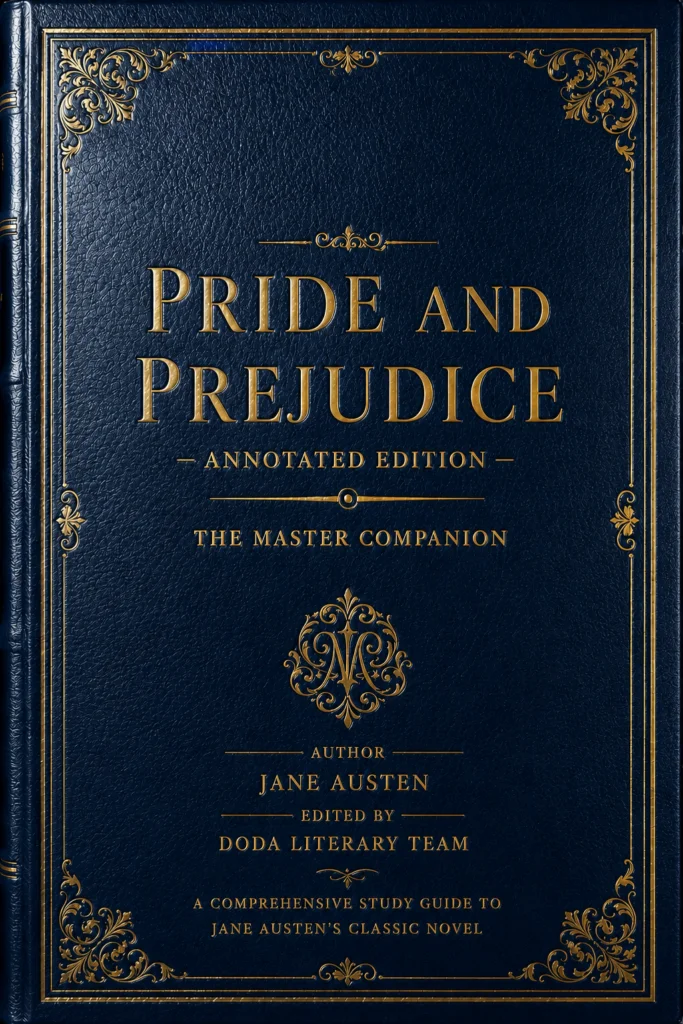
| Best prevention | Annotated edition with contextual notes |
❌ Mistake 1: Assuming Darcy Is a Villain
This is the most common error. Darcy behaves badly at the start — he is rude, dismissive, and snobbish. Many readers decide he is the antagonist and never update this view.
The truth: Darcy is actually the hero. His rudeness comes from social anxiety, not malice. He spends the entire novel becoming a better person. If you still hate him by chapter 20, you have missed the point. Understanding the slow, honest arc of the couple is the key, and our guide to Elizabeth and Darcy’s relationship traces exactly how their feelings change.
Fix: Give Darcy the benefit of the doubt. Assume there is more to him than his behaviour at the ball.
❌ Mistake 2: Trusting Wickham
Wickham is charming, good-looking, and tells a compelling story. Elizabeth believes him instantly. Most first-time readers do too.
The truth: Wickham is a liar and a con man. Every accusation he makes against Darcy is actually a confession of his own wrongdoing.
Fix: Pay attention to what Wickham actually does versus what he says. He talks about honour but avoids answering direct questions about his past.
❌ Mistake 3: Skimming the Social Context
Modern readers often skip over references to entailment, courtship rules, and class distinctions because they seem like background details.
The truth: These are the engine of the plot. The entailment is why Mrs. Bennet is desperate about marriage. The courtship rules are why Lydia’s elopement is catastrophic. Without understanding these, the stakes feel artificial. For a fuller picture of how Austen builds the story, our chapter-by-chapter summaries keep every event and rule clear as you go.
Fix: When you encounter a social rule you do not understand, pause and look it up. Or read an annotated edition that explains it as you go.
📚 Never miss crucial context again
👉 Get the Annotated Edition❌ Mistake 4: Reading Too Fast
Austen rewards slow reading. A single line of dialogue can carry multiple meanings — what is said, what is implied, and what the speaker actually means.
Example: When Darcy says Elizabeth’s family “may be in want of a wife,” he is not just talking about Bingley. He is revealing his own assumption that marriage is about property, not love.
Fix: Never read more than two chapters in one sitting. Austen’s novels are dense — binge-reading wastes the subtlety.
❌ Mistake 5: Judging Mrs. Bennet Too Harshly
Mrs. Bennet is loud, tactless, and embarrassing — easily the comic relief. But she is also the only parent paying attention to her daughters’ future.
The truth: When Mr. Bennet dies, his wife and daughters will be thrown out of their home. Mrs. Bennet’s obsession with marriage is not shallow — it is survival. She is annoying but she is not wrong.
📋 Quick Reference: Before You Read
| Don’t | Do |
|---|---|
| Decide Darcy is evil | Assume he has hidden depth |
| Trust Wickham’s story | Watch what he does |
| Skip social context | Learn the rules first |
| Read chapters quickly | Read slowly, one or two at a time |
| Laugh at Mrs. Bennet | Understand her fear |
🧩 What the Annotated Edition Unlocks
242 Literary Annotations
Historical context, critical analysis, and literary allusions for every chapter — understand why Austen chose certain words and what Regency-era social rules mean for the plot.
139 Modern Simplifications
Complex passages rewritten in clear modern English. When Austen's sentences get dense, you will find a plain-English breakdown right there on the page.
Chapter Summaries
Every chapter begins with a concise 150–250 word recap of key events — perfect for quick orientation before you read or for revision after.
76 Discussion Questions
With original answers. Perfect for teachers planning classroom activities, book clubs preparing for meetings, or students writing essays.
Character Relationship Maps
Detailed profiles of every major character with relationship diagrams showing how Elizabeth, Darcy, Bingley, Jane, Wickham, and the rest connect.
Bonus Resources
Story timeline, chapter length bar chart, 10-question quiz with answers, comprehensive glossary of 143 archaic terms, and further reading recommendations.
🏛️ Why the Social Rules Matter So Much
The biggest single mistake readers make with Pride and Prejudice is treating the Regency social world as mere “period setting.” In fact, that world is the plot. Everything that happens — every hesitation, every refusal, every hasty elopement — grows out of rules so specific to 1813 England that they have no modern equivalent.
Take the entail. Because Longbourn is entailed away from the female line, the Bennet estate passes to the ridiculous Mr. Collins on Mr. Bennet’s death. That single legal fact explains why Mrs. Bennet pushes her daughters toward marriage, why Elizabeth’s refusal to accept Collins is truly daring, and why Darcy’s income of ten thousand a year makes him one of the most eligible men alive. The stakes are not romantic melodrama; they are financial survival.
Then there is the code of courtship. A single woman could not call on a single man without a chaperone, could not be alone in a room with one, and received a proposal only after a man overcame enormous social risk. Elizabeth’s walk to Netherfield Park in muddy petticoats is scandalous precisely because of this code — and it is exactly the kind of detail that a fast reader misses and an annotated edition flags in the moment.
💔 The Mistake of Reading It as a Simple Romance
Many readers arrive expecting a straightforward love story and are confused by how slowly anything resembling romance develops. That is a category error. Pride and Prejudice is a novel about judgment, self-knowledge, and the long, difficult correction of first impressions — the romance is the reward, not the point.
Elizabeth does not fall for Darcy because he is handsome; she begins by despising him and only changes her mind as evidence accumulates that she was wrong. Darcy, likewise, must shed his pride before Elizabeth can trust him. If you read the novel looking for romantic thrills from page one, you will miss the slow intellectual courtship that is actually the book’s genius. This is also why the ending repays such careful reading: it is earned by the whole novel, not tacked on.
🔑 The Mistake of Ignoring Voice and Irony
Austen’s narrator is witty, dry, and quietly devastating, and readers who skim miss half the joke. Free indirect discourse — the trick of sliding from third-person description into a character’s own unspoken thoughts — is everywhere in the novel, and Austen uses it to expose vanity with surgical precision.
Take the famous opening line about a “truth universally acknowledged.” The obvious reading is a statement of marital necessity. The more penetrating reading is pure irony: the narrator is mocking the very assumption she appears to state. The annotated edition helps you catch these tonal shifts, showing you when Austen is being sincere and when she is quietly winking at the reader. Learning to feel the irony is, arguably, the difference between enjoying Pride and Prejudice and merely finishing it.
❓ Frequently Asked Questions
Is it normal to hate Darcy at first?
Yes, absolutely. Austen wrote Darcy to be off-putting at first so his transformation would be meaningful. Trust that the character arc is intentional.
How do I know who to trust in the novel?
Watch what characters do, not what they say. Wickham talks about virtue but acts selfishly. Darcy appears rude but acts honourably. Actions reveal character in Austen’s world.
Why does everyone care so much about marriage?
Because in Regency England, women had almost no economic options. Marriage was the only respectable path to financial security. The entailment means the Bennet sisters will be homeless when their father dies.
Is Mrs. Bennet supposed to be funny or sad?
Both. She is comic relief, but her desperation has a tragic foundation. Austen balances humour with genuine social critique.
How can an annotated edition help me avoid these mistakes?
Annotations flag exactly these pitfalls. When you are about to misjudge Darcy, the annotation explains his behaviour. When you miss a social rule, the note provides context. It is like having a literature professor reading alongside you.
What is the best reading pace to avoid mistakes?
Two chapters per sitting maximum. Read actively — pause after key scenes to reflect on what just happened and what it reveals about the characters.
Do I need to know Regency history before reading?
No, but it changes everything if you do. You can follow the plot blind, but the entail, courtship rules, and class expectations give the story its stakes. An annotated edition supplies that context at the moment you need it, so you never have to stop and research mid-chapter.
Why does everyone misunderstand Elizabeth's first impression of Darcy?
Because Austen deliberately makes Darcy unlikeable at first and lets Elizabeth’s pride drive her judgment. She trusts Wickham’s flattery and ignores the evidence against him. The famous lesson of the novel is that first impressions are exactly what you should not trust.