Can’t understand the original Austen? Read the simplified version first to grasp the story, then try the original audio to practice your listening skills. This method works for English learners, struggling readers, and anyone who wants to experience Austen without the language barrier.
📖
Original vs Simple Pride and Prejudice: Which Should You Read First?
Read simplified first to understand the plot and vocabulary — then listen to the original LibriVox audio to feel Austen's rhythm. A free learning method with side-by-side examples.
| Method | Read simplified first, then listen to original audio |
| Total Chapters | 61 |
| Original Audio | Free on LibriVox (~12 hours) |
| Best For | English learners, struggling readers, classic newcomers |
| Skill Level | Beginner to Advanced |
📖 Why This Method Works
When you read a simplified version first, you build a mental map of the chapter — who is speaking, what is happening, what the key vocabulary means. Then when you listen to the original audio, your brain is not struggling to decode the story. It can focus entirely on the language itself: the rhythm of Austen’s sentences, the rise and fall of the narrator’s voice, the subtle irony in the dialogue.
This is the opposite of how most people approach difficult texts. Most people jump into the original, get lost, and give up. The read-simplified-then-listen approach removes the frustration at every step.
For English learners: The simplified text builds vocabulary and comprehension. The audio builds listening skills and pronunciation awareness. Together they provide reading and listening practice from a single source.
For native speakers who struggle with classics: The simplified version proves that classic stories are engaging. The audio proves that the original language is beautiful. You need both realisations to become a confident classic reader.
📚 Side-by-Side: Chapter 1 — The Famous Opening
Step 1: Read the simplified version
Everyone knows that a rich single man must be looking for a wife. When a wealthy young man moves into a new area, the local families immediately assume he belongs to one of their daughters. They do not wait to learn his feelings or opinions — they have already decided.
Key vocabulary: wealthy (rich, having a lot of money), assume (believe without proof), belongs to (is meant for), opinions (thoughts, beliefs)
Step 2: Listen to the original audio
As you listen, follow along with this original text:
“It is a truth universally acknowledged, that a single man in possession of a good fortune, must be in want of a wife. However little known the feelings or views of such a man may be on his first entering a neighbourhood, this truth is so well fixed in the minds of the surrounding families, that he is considered as the rightful property of some one or other of their daughters.”
What to notice while listening: The narrator’s voice rises and falls with the irony. Austen is making fun of the families, and the audio makes this obvious. The long sentence (42 words) feels natural when spoken. “Truth universally acknowledged” sounds grand — that is the joke. The narrator’s tone signals that this grand claim is actually just gossip.
💬 Side-by-Side: Chapter 3 — Darcy at the Ball
Step 1: Read the simplified version
Darcy danced only twice — both times with women he already knew. He refused to meet anyone new and spent the rest of the evening walking around the room, talking only to his own group of friends. His reputation was decided. Everyone decided that he was the proudest, most unpleasant man in the world, and they all hoped he would never come back.
Step 2: Listen to the original audio
“Mr. Darcy danced only once with Mrs. Hurst and once with Miss Bingley, declined being introduced to any other lady, and spent the rest of the evening in walking about the room, speaking occasionally to one of his own party. His character was decided. He was the proudest, most disagreeable man in the world, and every body hoped that he would never come there again.”
What changed: “Declined being introduced” became “Refused to meet anyone new.” “His own party” became “His own group of friends.” “Disagreeable” became “Unpleasant.” The original mentions Mrs. Hurst and Miss Bingley by name; the simplified version drops the names because they are not needed to understand Darcy’s behaviour.
💔 Side-by-Side: Chapter 34 — Darcy’s Proposal
Step 1: Read the simplified version
Darcy walked into the room where Elizabeth was alone. He seemed agitated. After a long silence, he spoke. He told her how much he loved her, even though he had tried to fight his feelings. He admitted that her lower social position and her embarrassing family were problems he had struggled with. But in the end, his love had won.
Step 2: Listen to the original audio
“In vain I have struggled. It will not do. My feelings will not be repressed. You must allow me to tell you how ardently I admire and love you. I have fought against my better judgment, my family’s expectations, your inferiority, and your family’s low social position — but I love you anyway.”
Why the audio matters here: Darcy’s speech is full of pauses — “In vain I have struggled. It will not do.” The short, broken sentences show his emotional state. A narrator who reads these pauses correctly makes the scene far more powerful than silent reading can. You hear his desperation. You hear the weight of every word.
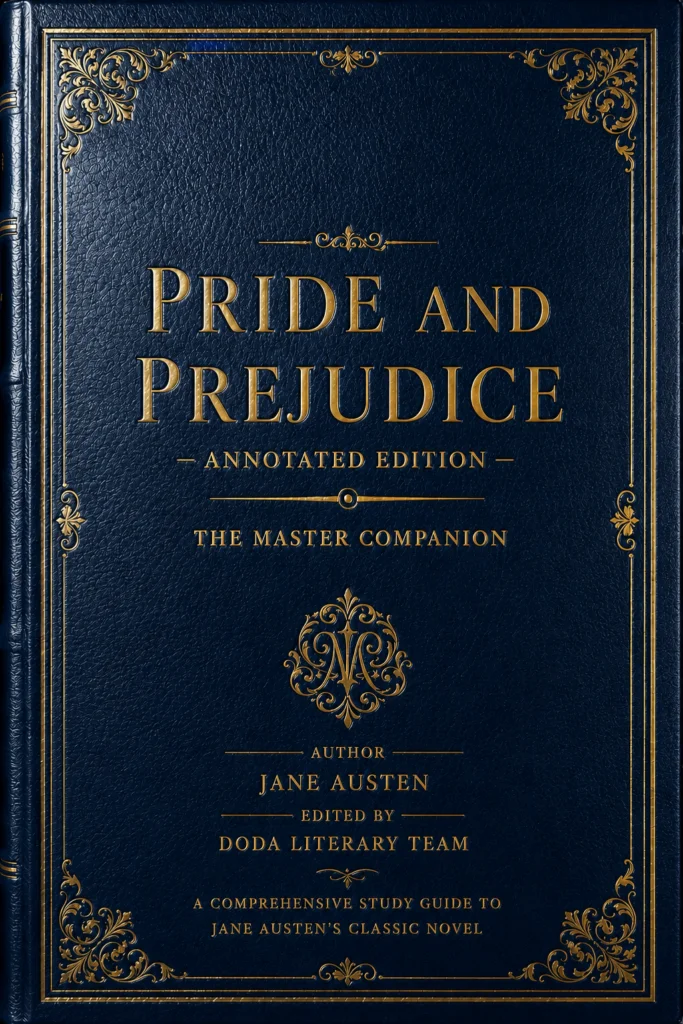
📖 Master every chapter with the annotated edition — original text, simplifications, and audio guides
👉 Get the Annotated Edition🎯 How to Build a Full Learning Routine
This method works for all 61 chapters. Here is the routine:
- Read the simplified chapter (15-20 minutes per chapter for the full novel, faster once you get used to the style)
- Check the key vocabulary — note any words you are unsure about
- Listen to the original audio while reading along with the original text (optional but recommended)
- Listen again without reading — test your comprehension
After 61 chapters, you will have:
- Read an entire classic novel in accessible language
- Heard over 12 hours of original 19th-century English
- Built vocabulary, listening comprehension, and reading confidence simultaneously
👤 What Level of English Learner Can Use This Method
| Level | How to Use This Method | Expected Result |
|---|---|---|
| Beginner (A1-A2) | Read simplified only, skip audio for now | Story comprehension, basic vocabulary |
| Intermediate (B1-B2) | Read simplified, then listen with text | Rapid vocabulary growth, listening practice |
| Advanced (C1-C2) | Read simplified quickly, then focus on audio | Nuance, rhythm, accent familiarisation |
| Native speaker struggling | Read simplified, then listen to appreciate the original | Confidence to tackle other classic novels |
📚 What the Annotated Edition Unlocks
242 Annotations
Historical context, literary analysis, and word definitions for every chapter
139 Simplifications
Dense Austen sentences rewritten in clear modern English alongside the original
Character Profiles
Detailed relationship maps for Elizabeth, Darcy, and every major character
76 Discussion Questions
Ready-made prompts with original answers for essays and classroom activities
143-Term Glossary
Every archaic word and social term from Regency England defined clearly
Visual Guides
Character diagram, story timeline, and chapter length bar chart
❓ Frequently Asked Questions
Can I read the simplified version on its own?
Yes. The simplified version works as a standalone retelling of Pride and Prejudice in modern English. However, you miss Austen's original language, irony, and sentence craft. The two-pass method (simplified then original) gives you both comprehension and appreciation.
Where can I find the simplified version?
The Pride and Prejudice: Complete Reader's Bundle includes the original annotated text, the simplified English retelling, and a 15-minute study guide. The simplified version covers all 61 chapters in accessible modern English.
Is the LibriVox audio free?
Yes. LibriVox audiobooks are free because they are read by volunteers and the text is in the public domain. The Pride and Prejudice recording is well-regarded and available as MP3 downloads or streaming.
How long does this method take for the whole novel?
Each chapter takes about 20-30 minutes (read simplified + listen to original). At that pace, the full novel takes roughly 20-30 hours total — spread over a few weeks or a semester.
Can I use this method for other classic novels?
Absolutely. The read-simplified-then-listen method works for any classic novel with a public domain audiobook. Start with Austen, then try Dickens, the Brontës, or Melville. Each gets easier with practice.
Does the annotated edition include both versions?
The annotated edition keeps the full original text and adds annotations, simplifications, character profiles, discussion questions, and a glossary. The simplified English retelling is a separate volume included in the Complete Reader's Bundle.
📚 Related Articles
🎯 Master Pride and Prejudice with the Complete Reader’s Bundle
The Pride and Prejudice Complete Reader’s Bundle gives you all three tools you need:
- ✅ Annotated original edition — full 1813 text with 242 annotations
- ✅ Simplified English retelling — all 61 chapters in clear modern English
- ✅ 15-minute study guide — quick reference for chapters, characters, and themes
- ✅ Chapter summaries — every chapter condensed to its key events
- ✅ 76 discussion questions — perfect for book clubs and study groups
- ✅ 143-term glossary — every archaic word defined