Mary Wollstonecraft’s love letters to Gilbert Imlay are among the most intensely personal documents of eighteenth-century literature. Written between 1793 and 1796, these letters capture the hopes, passions, and heartbreaks of the feminist thinker who wrote A Vindication of the Rights of Woman, revealing a woman whose intellectual convictions could not shield her from the agony of romantic betrayal.
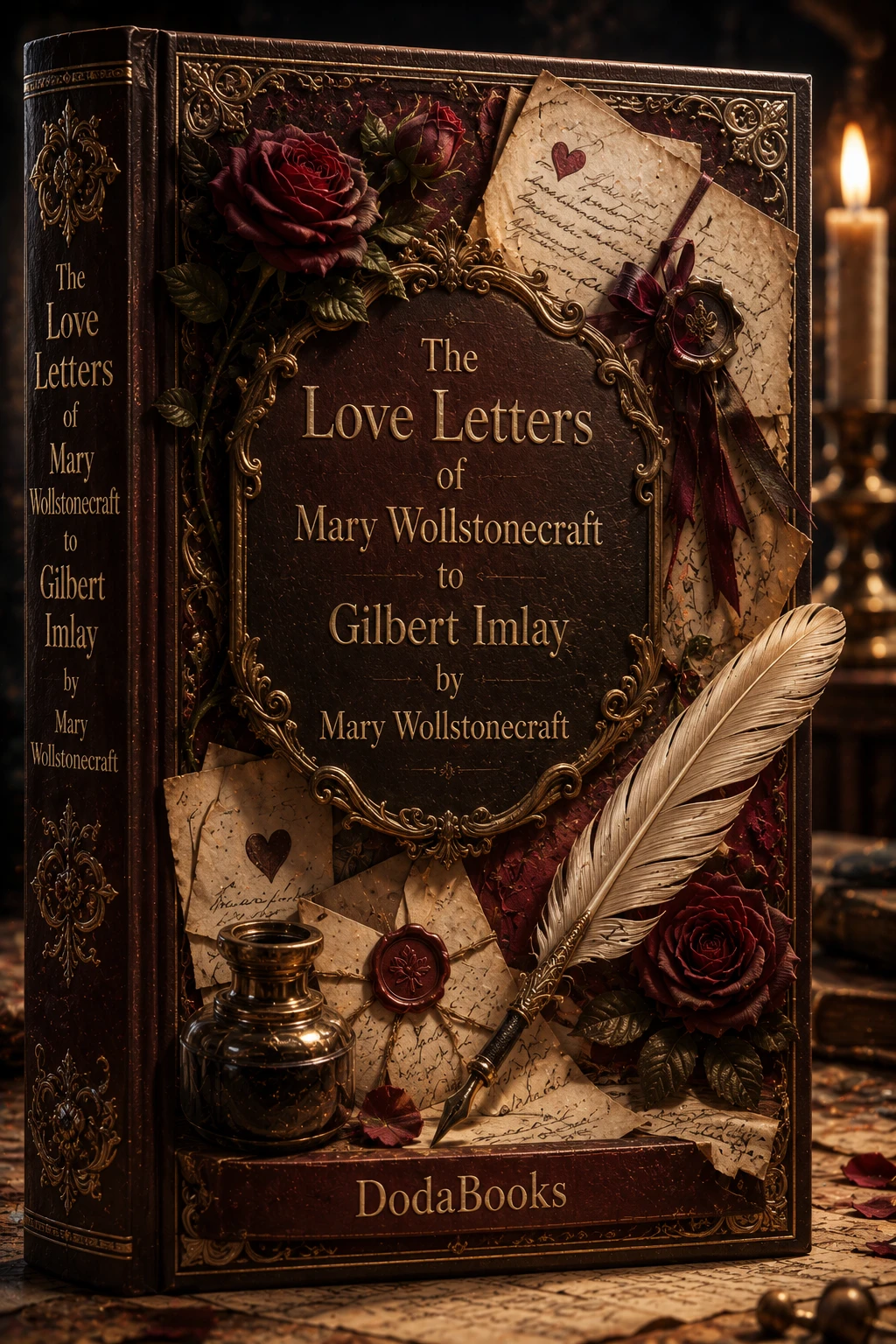
The Love Letters of Mary Wollstonecraft to Gilbert Imlay
A guide to the passionate, heartbreaking letters of the mother of feminism — written at the peak of the French Revolution, baring a soul caught between reason and love.
| Author | Mary Wollstonecraft (1759–1797) |
| Letters Written | 1793–1796 |
| Recipient | Gilbert Imlay (1754–1828) |
| Genre | Personal correspondence |
| Key Context | French Revolution, Napoleon’s rise |
| Total Letters | ~80 surviving |
| Known for | Raw emotional authenticity |
👩 Who Was Mary Wollstonecraft?
Mary Wollstonecraft was the English writer and philosopher whose 1792 book A Vindication of the Rights of Woman laid the intellectual foundations of modern feminism. She argued that women are not naturally inferior to men, writing:
“I do not wish women to have power over men; but over themselves.”
Her arguments were radical for the 1790s. Education, she insisted, should cultivate reason in women as well as men. A woman’s worth was not determined by her beauty or her husband’s status. Wollstonecraft lived these beliefs, earning her own living as a governess and translator, famously declaring independence from patriarchal society.
By the time she met Gilbert Imlay in Paris in 1793, Wollstonecraft was already one of the most controversial writers in Europe. Revolution was tearing France apart, and Wollstonecraft was there — alone, independent, thirty-four years old — believing she had found love at last.
💔 Her Relationship with Gilbert Imlay
Gilbert Imlay was an American adventurer, businessman, and former soldier in the American Revolutionary War. Handsome, charming, and unreliable, he swept Wollstonecraft off her feet in Revolutionary Paris. She registered as his wife at the American Embassy to gain protection as an Englishwoman in an increasingly dangerous France, though they never formally married.
The relationship began with passion. Wollstonecraft, who had spent her life arguing for reason, confessed in a letter:
“I have no reason to complain of the world, or its creatures; for I have been so kindly treated by one, that I am become a child again.”
The cracks appeared quickly. Imlay was frequently absent on business trips. Wollstonecraft gave birth to their daughter, Fanny, in May 1794 — alone. Imlay visited infrequently. His coldness toward Fanny cut his partner deeply.
Within two years, Imlay’s affections had shifted to another woman. Wollstonecraft’s letters trace the arc from devotional love to desperate hope to a grief so profound it nearly destroyed her.
📜 The Content of the Letters
The surviving Wollstonecraft-Imlay letters span roughly eighty documents, ranging from brief notes to lengthy epistles full of accusation and tenderness. Together they tell a story of psychological realism unmatched in eighteenth-century literature.
- The love letters (1793–1794): Warm, confident, and passionate. Wollstonecraft writes with the voice of someone finally experiencing the affection she deserves.
- The anxious letters (1795): Imlay grows distant. Wollstonecraft notices. Her tone shifts from hopeful expectation to nervous questioning.
- The despairing letters (1795–1796): Imlay has abandoned her. Wollstonecraft’s letters alternate between rage and pleading, intellectual self-awareness and pure emotional need.
The most remarkable quality of these letters is Wollstonecraft’s refusal to hide. She writes:
“I am a strange compound of weakness and resolution.”
This honesty — her willingness to document humiliation, jealousy, and continued love even when intellectually she knows better — is what makes the collection so powerful. She is simultaneously the forensic analyst of her own pain and a woman helplessly feeling it.
🏛️ Literary and Historical Significance
The Wollstonecraft letters matter for several reasons:
As literature: These letters belong to the great tradition of English personal correspondence. Like the letters of John Keats or Virginia Woolf, they transcend biography to become art. Wollstonecraft’s prose combines Augustan clarity with Romantic emotional intensity. Her descriptions of nature in France mirror her inner states with subtle craft.
As feminist history: Wollstonecraft’s letters reveal the private cost of being a public intellectual. Her biographer Claire Tomalin notes that reading them requires confronting the contradiction between Wollstonecraft’s feminist theory and her personal vulnerability. Wollstonecraft herself was acutely aware of the gap between her ideals and her feelings:
“I am going to write a book, the title of which will be ‘The Wrongs of Women’ — my own wrongs will probably furnish a chapter.”
As human testimony: These documents shock readers because Wollstonecraft’.
As political context: The letters are set against the backdrop of Revolutionary France, the Reign of Terror, and England’s war with France. Wollstonecraft was writing in Paris while the guillotine claimed hundreds per month. Her private drama unfolds against public catastrophe.
The letters show Wollstonecraft negotiating between Enlightenment reason and Romantic emotion — arguably the central tension of her life and work.
📚 Read Wollstonecraft's letters in a clean, distraction-free edition
👉 Get the Book at DodaBooks🔍 Key Themes in the Letters
Love and Dependency
Wollstonecraft loved Imlay with a fierceness that contradicted her own philosophy of independence. The letters are haunted by her awareness that intellectual conviction cannot control emotional attachment. She writes:
“One of the arts of the devil is to persuade people that they are in love.”
She knows she is trapped. She cannot stop.
Motherhood and Isolation
Her letters about their daughter Fanny are among the most moving in the collection. Wollstonecraft was abandoned by Imlay shortly after giving birth. The tenderness of her descriptions of Fanny sits beside the bitterness toward a father who refused to care:
“I wished, with a species of phrensy, that I could console myself with my little Fanny, but she is not near me.”
Self-Deception and Self-Knowledge
No early modern correspondent writes with Wollstonecraft’s capacity for simultaneous insight and blindness. In one letter she diagnoses the psychological mechanism of her attachment:
“I have been treated with a degree of indifference which I did not believe it possible to feel.”
An instant later she declares herself unable to stop loving him. The letters are existential documents of the gap between what we know and what we feel.
❓ Frequently Asked Questions
Why did Mary Wollstonecraft write love letters to Gilbert Imlay?
She wrote because she loved him and because letter-writing was the primary form of communication between separated intimates in the 1790s. The letters served both practical and emotional purposes: Imlay traveled constantly, and Wollstonecraft used letters to maintain connection, express her feelings, and plead for his return.
How many love letters survive?
Approximately eighty letters from Wollstonecraft to Imlay survived. Imlay’s side of the correspondence was largely destroyed, though some drafts and copies exist. What remains is overwhelmingly Wollstonecraft’s voice — making the collection one-sided but intensely powerful.
Are the letters available in a modern edition?
Yes. The DodaBooks edition collects Wollstonecraft’s surviving letters to Imlay in a clean, beautifully formatted digital edition with smart typography, chapter navigation, and no DRM. It’s the most accessible way to read the letters today.
What happened to Fanny Imlay?
Fanny Imlay, Wollstonecraft’s daughter by Gilbert Imlay, was raised by William Godwin (Wollstonecraft’s second husband) and Mary Shelley (Wollstonecraft’s daughter by Godwin). Fanny died by suicide in 1816 at the age of twenty-two. Her fate is one of the saddest footnotes in the Wollstonecraft story.
Do the letters reveal anything about Wollstonecraft's feminism?
Yes, and the revelation is complicated. The letters forced later feminists to confront Wollstonecraft’s emotional vulnerability, which contradicted the image of the unyielding rationalist. Modern feminist criticism has argued that acknowledging this tension actually strengthens Wollstonecraft’s importance: she was not a cardboard icon of reason but a human being who documented the full cost of patriarchal rejection from inside the experience.
What is the best letter in the collection?
Many readers are most moved by the letter Wollstonecraft wrote after her first suicide attempt, in which she describes walking across London and along the Thames before stopping herself. She then writes with astonishing clarity about wanting to die and needing to live. The letter is simultaneously a cry of pain and an exercise in forensic self-examination.
How should I read the letters?
Read them chronologically. The arc matters. Start with the first confident professions of love and watch the tone darken letter by letter. Pay attention to Wollstonecraft’s physical descriptions — seasons changing, weather outside her window — as metaphors for her emotional state. Note how often she writes about reason while describing feelings that reason cannot touch.
✨ What Makes the DodaBooks Edition Special
This is the original collection of letters, carefully prepared for modern readers without distractions or clutter.
Zero Distractions
No ads, no license pages, no project boilerplate — just the original letters, clean and uninterrupted.
Smart Typography
Curly quotes, em-dashes, proper ellipsis — typeset with care for a premium reading experience.
Clean Endnotes
Linked endnotes with easy back-navigation — no intrusive footnotes breaking the flow of the letters.
Chapter Navigation
Full table of contents with back-to-chapter links, making it easy to navigate between letters.
Cleaned & Polished
All Gutenberg boilerplate stripped, consistent formatting throughout all ~80 letters.
No DRM
You own your copy — read on any device, anytime, forever.
📚 Related Articles
Read the Original Letters
Wollstonecraft's letters are powerful enough to stand on their own. The DodaBooks edition preserves the complete original text in a clean, distraction-free format.
- ✅ All ~80 letters from the original collection
- ✒️ Smart typography — curly quotes, em-dashes, proper ellipsis
- 📜 Full table of contents with back-navigation
- 🔒 DRM-free — read on any device
- 📥 Instant download — EPUB + PDF + AZW3